Roof Inspections and Insurance Claims: What Every Homeowner Should Know
Filing a homeowners insurance claim after storm damage can feel overwhelming — especially when the roof is involved. A professional roof inspection for insurance purposes is often the first step toward a smoother, more informed process. This guide covers the basics so you know what to expect.
Note: This article is for general educational purposes only. It is not legal or insurance advice. Always consult your insurance provider or a licensed professional for guidance specific to your situation.
Why a Roof Inspection Matters When You Have a Claim
When you contact your insurance company after storm damage, one of the first things that happens is an assessment of the roof's condition. Insurance adjusters look at whether the damage is storm-related, how extensive it is, and — importantly — what the roof's condition was before the event.
That last part is where many homeowners get caught off guard. If there's no prior record of your roof's condition, it can be harder to separate storm damage from pre-existing wear. A documented inspection history changes that.
A professional roof inspection gives you:
- A clear, dated record of your roof's condition
- Documentation of any damage observed, and when it appeared
- A credible third-party report to support your claim conversation
If you've been tracking your roof's health over time, you already have a baseline. That's a real advantage.
What Happens During a Roof Inspection for Insurance?
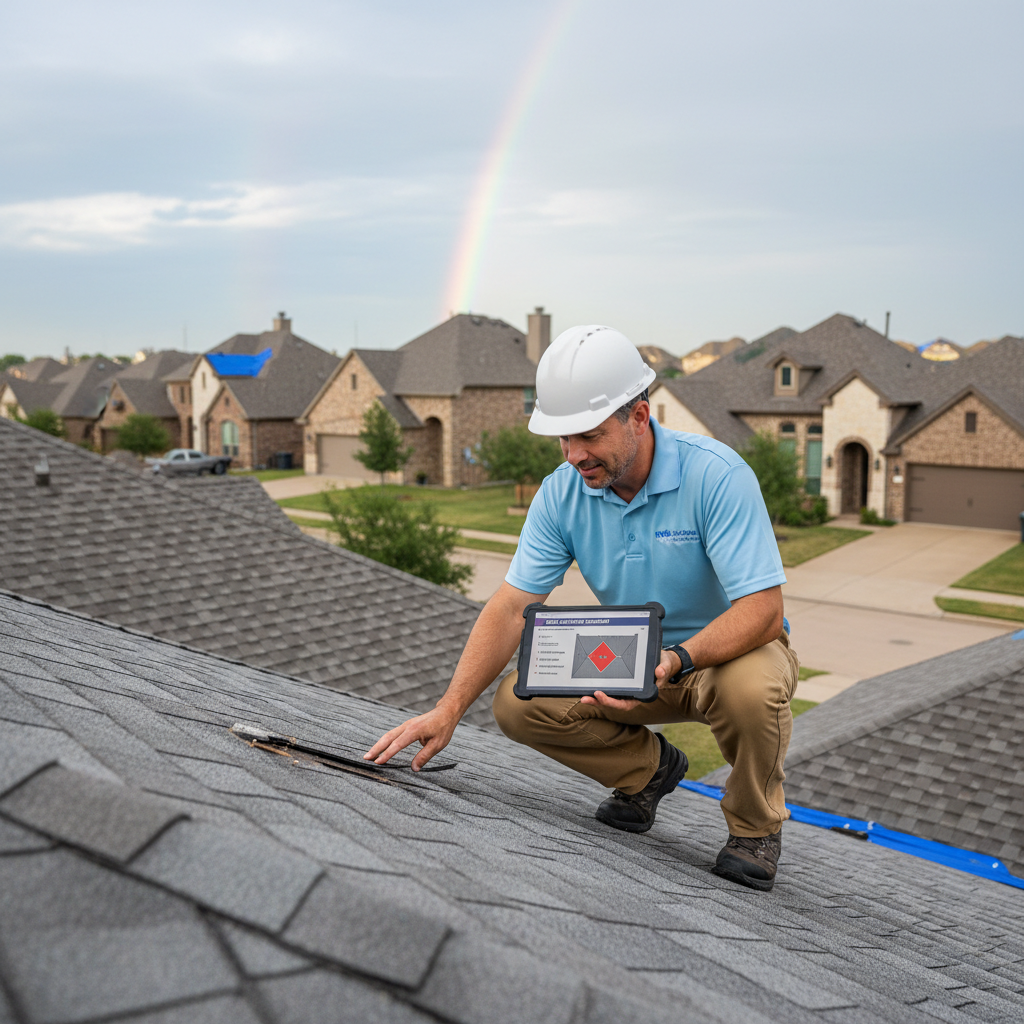
A qualified roofing professional will physically examine your roof, looking at the areas most likely to show storm or wear-related damage. This typically includes:
- Shingles — looking for missing, cracked, curled, or bruised sections
- Flashing — checking seals around chimneys, vents, and skylights
- Gutters and drainage — inspecting for granule buildup, which can signal shingle deterioration
- Decking and structure — identifying any sagging or soft spots that suggest deeper damage
- Penetrations — evaluating any area where something passes through the roof surface
After the inspection, the professional documents their findings. Traditionally, this comes back as a long, technical PDF that's easy to misread or misplace. That's a problem worth solving — more on that below.
For a closer look at the kinds of damage that often prompt a claim, see How Texas Hail and Storms Damage Your Roof Over Time.
The Timing Question: Before or After the Storm?
Ideally, both. Here's why:
Before a storm: A pre-storm inspection establishes a clean baseline. If your roof was in good condition before a hail event, you have documentation to show it. This is especially valuable in storm-prone areas like East Texas, where severe weather can roll through multiple times a season.
After a storm: A post-storm inspection documents any new damage while it's fresh. Quick action matters — some policies have time limits on when you can report damage.
If you haven't done a pre-storm inspection yet, don't wait. Our Texas Storm-Season Roof Maintenance Checklist is a good place to start. And if you're not sure whether your roof even needs attention right now, check out 7 Signs Your Roof Needs a Professional Inspection Before the Next Storm.
Why Clear Documentation Makes a Difference
Insurance adjusters work from evidence. The clearer and more organized your documentation, the easier it is to have a productive conversation about your claim.
A 40-page PDF inspection report with technical language and inconsistent formatting doesn't help most homeowners. It often sits in a drawer, unread, until it's urgently needed — and then it's hard to interpret under pressure.
That's the core problem Full Armor HomeIQ was built to solve. Our RoofIQ Score turns a professional inspection into a single 0–100 number that's easy to understand at a glance. It's shareable, securely stored, and tracked over time — so you always have a clean, credible record ready when you need it.
Instead of scrambling through old paperwork, you can simply share a link. Whether you're talking to an adjuster, a real estate agent, or a lender, a clear roof condition report tells the story without confusion.
Learn more about how the score works: What Is a RoofIQ Score — and How Is It Calculated?
What to Expect Working with a Roofing Professional
If you're in Texas — especially East Texas, the Dallas area, Tyler, Longview, or Nacogdoches — finding a trustworthy roofing professional for a roof inspection for insurance purposes is an important first step. Not every estimate or visual walkthrough qualifies as a thorough inspection.
If you're unsure about the difference, this article breaks it down clearly: Roof Inspection vs. Roof Estimate: What's the Difference?
Full Armor HomeIQ connects homeowners with vetted local inspection and roofing companies, handles scheduling, and ensures the report comes back in a standardized, easy-to-read format — not a jumble of notes.
The Long-Term Value of Tracking Roof Health
One inspection is helpful. A history of inspections is even better.
When you track your roof's condition year over year, you can see trends developing before they become expensive surprises. You also build a paper trail that demonstrates responsible maintenance — something that can matter during a claim conversation, during a home sale, or when refinancing.
For more on how this kind of documentation pays off in the long run, see The Hidden Cost of Waiting on Roof Repairs and How a Strong RoofIQ Score Boosts Your Home's Resale Value.
A Smarter Starting Point
You can't control the weather — but you can control how prepared you are. A professional roof inspection, documented clearly and kept updated over time, gives you the foundation you need for any situation: a claim, a sale, a refinance, or simply peace of mind.
Ready to get started? Get Your RoofIQ Score today and build the kind of clear, trusted roof record that works for you when it matters most.
Frequently Asked Questions
Written by Full Armor HomeIQ Team
The Full Armor HomeIQ team helps homeowners understand and track their home's condition — starting with the roof.
Get Your RoofIQ Score
Contact Full Armor HomeIQ for a free inspection and consultation.
Get a Free Quote