
How Texas Hail and Storms Damage Your Roof Over Time
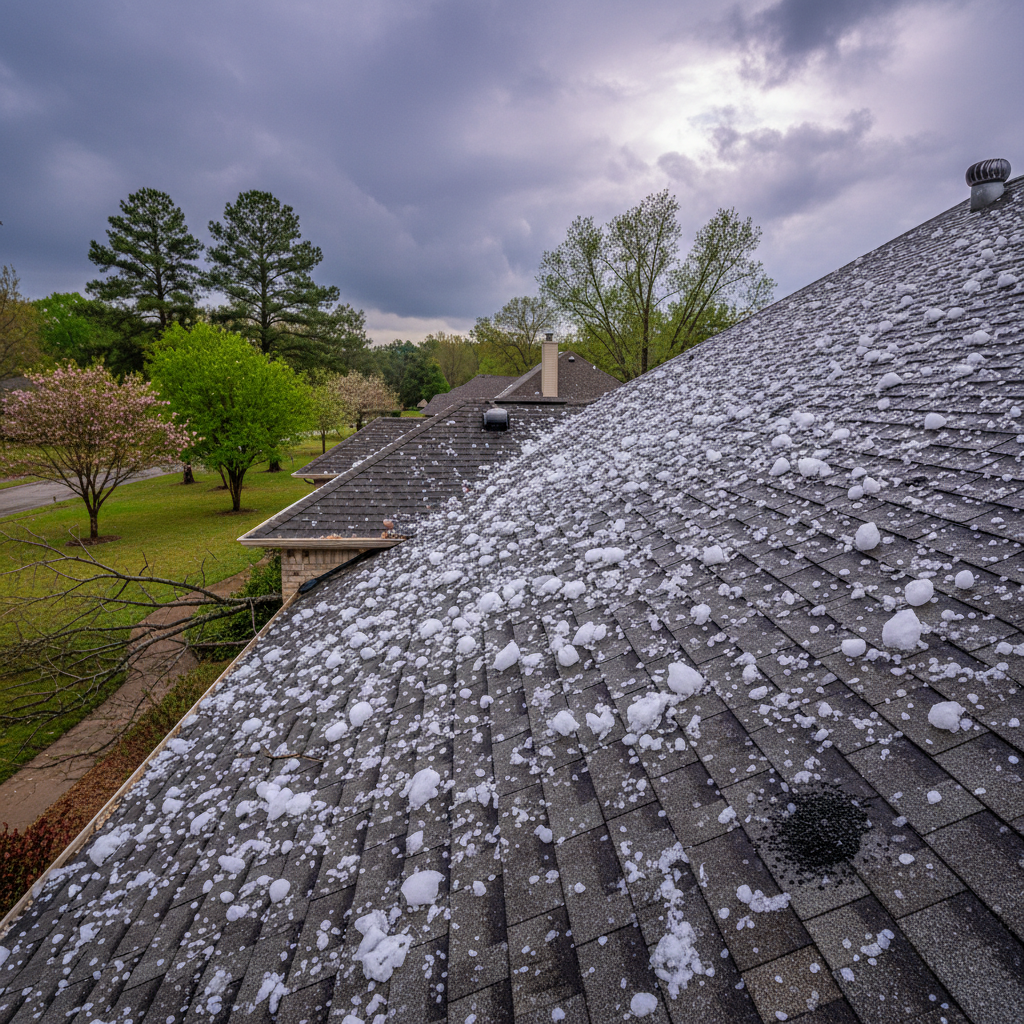
Texas weather is relentless. From spring hailstorms rolling across the Piney Woods to severe thunderstorms sweeping through the Dallas–Fort Worth corridor, roofs in this state take a beating year after year. The problem isn't just a single bad storm — it's the steady, compounding damage that builds up over time and often goes unnoticed until a costly repair is unavoidable.
Understanding how Texas hail and storms damage your roof over time is the first step toward protecting one of your home's most important — and expensive — systems.
The Cumulative Nature of Storm Damage
Most homeowners picture storm damage as something dramatic and obvious: missing shingles, a visible hole, water pouring through the ceiling. But the reality is far more gradual.
Each hailstorm, windstorm, or heavy rain event leaves behind small imperfections. On their own, these might seem minor. Over two, three, or five storm seasons, those small imperfections become pathways for moisture, accelerate material aging, and quietly compromise the structural integrity of your roof.
This is exactly why a single inspection after one storm doesn't tell the whole story. Roof condition is a trend, not a snapshot.
How Hail Damages Shingles (Even When You Can't See It)
Hail is one of the most deceptive roof hazards in Texas. A hailstone doesn't have to be golf-ball sized to cause real damage. Even smaller stones — under an inch — can:
- Knock granules loose from asphalt shingles, exposing the underlying mat to UV rays and moisture
- Create micro-fractures in the shingle surface that expand with heat and freeze cycles
- Dent or crack ridge caps and flashing, breaking the watertight seal at roof edges and peaks
- Weaken the shingle's adhesive strip, making it more vulnerable to wind lift in future storms
Granule loss is especially important to understand. Those granules are your shingle's first line of defense against the Texas sun. Once they're gone, shingles age much faster — and the damage from that original hailstorm continues doing harm long after the storm has passed.
What Wind Does to Your Roof Over Multiple Seasons
High winds are a constant in Texas, particularly in East Texas during spring and fall storm seasons. Wind damage is cumulative in a specific way:
- First storm: Wind lifts shingle edges slightly, breaking the adhesive bond along the tab.
- Second storm: Those same shingles lift further, allowing water to wick underneath.
- Third storm or heavy rain: Water penetrates the underlayment, reaching the decking below.
By the time you notice a water stain on your ceiling, the damage has often been building for months — or years. Wind also drives debris across your roof surface, scraping away granules and wearing down flashing around chimneys, vents, and skylights.
Rain and Moisture: The Silent Compounders
East Texas receives significant annual rainfall, and that moisture compounds every other type of storm damage. Water that finds even a pinhole-sized opening in your roofing system will:
- Saturate the roof decking, leading to rot and structural weakness
- Encourage mold and mildew growth in your attic space
- Cause insulation to lose effectiveness over time
- Create conditions for wood-destroying organisms to take hold
What starts as minor hail damage can become a moisture problem, which becomes a structural problem — all without a single dramatic event to tip you off.
Related: 5 Warning Signs Your Roof Needs Attention — learn what to look for between professional inspections.
Why One Inspection Isn't Enough
If you've only had your roof inspected once — say, when you bought your home — you're working with outdated information. Texas roofs that experience multiple storm seasons without a follow-up inspection are essentially unknown quantities. You don't know:
- How much granule loss has occurred since the last inspection
- Whether flashing has pulled away from penetration points
- How many small hail impacts have accumulated on the surface
- Whether the underlayment is still intact under problem areas
Tracking your roof's condition over time — not just after one storm — is the only way to understand whether it's holding up or slowly declining.
See also: Your Texas Storm-Season Roof Maintenance Checklist for a practical guide to staying ahead of seasonal damage.
The RoofIQ Approach: A Score That Tells the Real Story
This is the problem Full Armor HomeIQ was built to solve. Instead of handing you a confusing 40-page PDF after a single inspection, RoofIQ turns a professional roof inspection into a simple 0–100 health score — and tracks that score over time.
After each inspection, you can see whether your roof's condition is stable, improving after repairs, or trending downward. That trend line is powerful information when you're deciding whether to address an issue now or monitor it, when you're selling your home, or when you need documentation for a claim.
Learn more: What Is a RoofIQ Score — and How Is It Calculated?
For homeowners in Tyler, Longview, Nacogdoches, and across East Texas, where storm seasons are long and weather patterns are unpredictable, having a documented roof health history isn't just smart — it's the kind of proof that matters when it counts most.
Thinking about selling? A strong, documented RoofIQ score can be a genuine asset. Here's how it can boost your home's resale value.
What to Do After a Texas Storm
You don't need to climb on your roof after every thunderstorm. But here's a simple framework:
- After any storm with hail or winds above 50 mph: Schedule a professional roof inspection
- Annually: Get a baseline inspection even in quiet years — damage accumulates across seasons, not just within them
- Before selling or refinancing: Get a fresh inspection and a shareable RoofIQ report
- After any roof repair: Confirm the fix held with a follow-up score
Texas storms are going to keep coming. The difference between a homeowner who gets blindsided by a $15,000 repair and one who catches a problem early is usually just one thing: a current, documented picture of their roof's condition.
Get Your RoofIQ Score today and connect with a vetted local inspection company in East Texas or anywhere in the state. Know where your roof stands — before the next storm decides for you.
Frequently Asked Questions
Written by Full Armor HomeIQ Team
The Full Armor HomeIQ team helps homeowners understand and track their home's condition — starting with the roof.
Get Your RoofIQ Score
Contact Full Armor HomeIQ for a free inspection and consultation.
Get a Free Quote