East Texas Roof Inspection Guide: What Our Weather Does to Your Shingles
If you live in East Texas, you already know the weather doesn't play nice. Long, humid summers. Sudden severe storms. The occasional ice event that catches everyone off guard. All of that adds up — and your roof is the first thing that takes the hit.
This guide breaks down exactly what East Texas weather does to your shingles, what to watch for, and why a professional roof inspection is one of the smartest moves you can make as a homeowner in this region.
Why East Texas Is Especially Hard on Roofs
The climate here is genuinely unique. East Texas sits in a zone that combines deep Southern humidity with the storm patterns of Tornado Alley and the occasional hard freeze. That combination creates stress on roofing materials that homeowners in drier climates simply don't face.
Here's the short version of what your roof is dealing with:
- Heat and UV exposure — Summer temperatures regularly push well past 95°F, and direct sun exposure causes asphalt shingles to dry out, crack, and lose their protective granules faster than in cooler climates.
- High humidity — Moisture in the air doesn't just affect how you feel outside. It works its way under shingles, promotes algae and moss growth, and over time can cause decking and underlayment to break down.
- Severe thunderstorms — Hail, high winds, and falling debris are a regular part of spring and fall in the Longview, Tyler, and Nacogdoches areas. Each storm event can cause damage that isn't visible from the ground.
- Freeze-thaw cycles — Even a mild ice event can force water into small cracks and expand them. Over several winters, this kind of damage compounds.
For a deeper look at how storm events stack up damage over time, see our article on how Texas hail and storms damage your roof over time.
What Happens to Shingles in This Climate
Asphalt shingles are the most common roofing material in East Texas, and they're durable — but they're not indestructible. Here's how local weather patterns specifically degrade them:
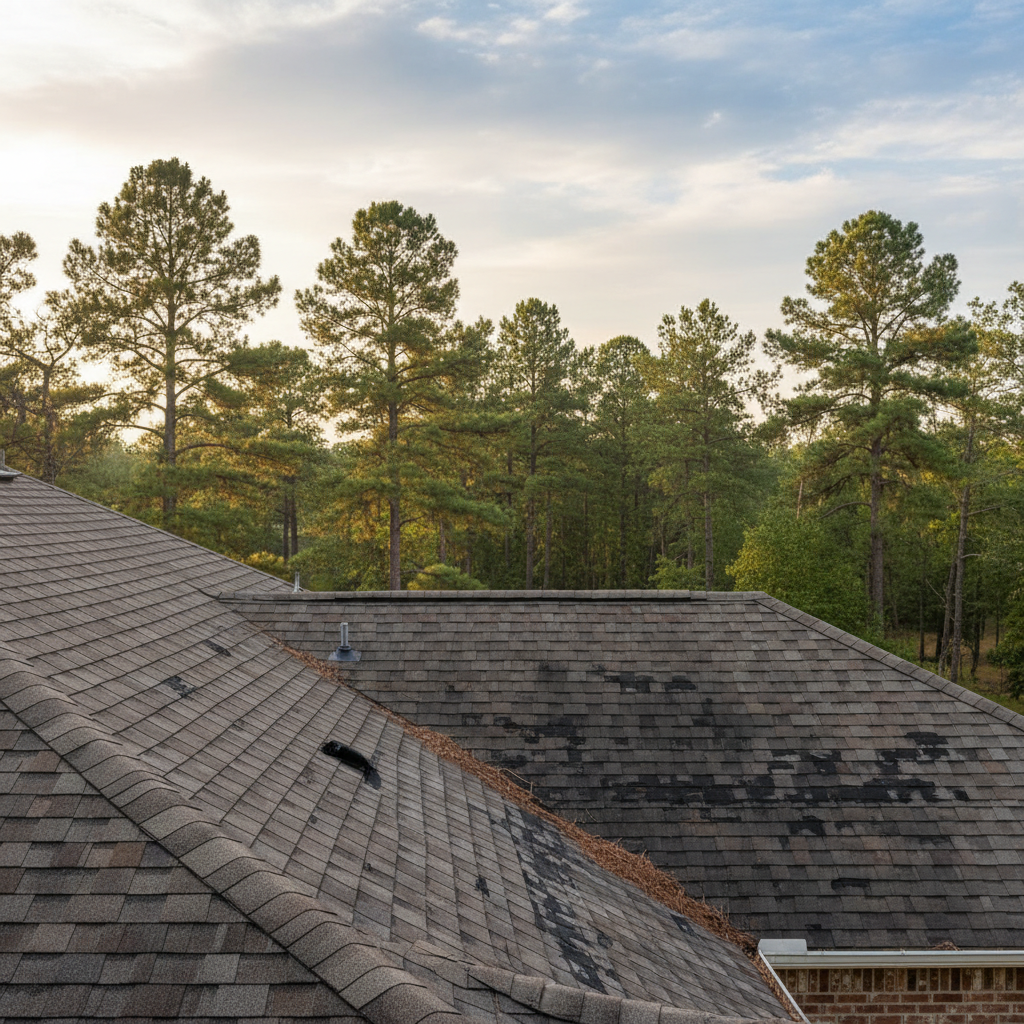
Granule Loss from Heat and UV
The small granules embedded in asphalt shingles protect them from the sun. Extreme heat accelerates granule loss, leaving the asphalt layer exposed. Once that happens, shingles dry out and become brittle much faster.
Algae and Moss from Humidity
East Texas humidity creates ideal conditions for algae streaks and moss growth, especially on north-facing roof sections that stay shaded. Beyond being unsightly, moss holds moisture against the shingle surface and can lift shingle edges over time.
Wind Damage from Storms
High winds can lift shingle edges, break the adhesive seal between shingles, or remove them entirely. Even shingles that look intact after a storm may have broken seals that allow water intrusion during the next rain.
Hail Bruising
Hail hits leave soft spots — called bruising — in asphalt shingles. These spots aren't always visible without getting up on the roof. Bruised shingles are structurally weakened and fail sooner. This is one of the key reasons a professional roof inspection after a major storm matters so much.
The Problem with Waiting
Most East Texas homeowners don't think about their roof until something goes obviously wrong — a leak in the ceiling, missing shingles after a big storm, or a buyer's inspection that reveals problems during a home sale.
By that point, small, fixable issues have often turned into larger, more expensive ones. Water that gets under a damaged shingle doesn't stop there. It reaches the decking, the insulation, and eventually the interior of your home.
The warning signs are often subtle and easy to miss. Our post on 5 warning signs your roof needs attention is a good place to start if you're not sure what to look for.
How Often Should You Get a Roof Inspection in East Texas?
Given the climate, most roofing professionals recommend inspecting your roof at least once a year — and after any significant storm event. East Texas sits in a region that sees multiple named storm events each year, so waiting for a fixed annual schedule isn't always enough.
For guidance on timing, check out how often you should really get your roof inspected.
What a RoofIQ Inspection Covers
A standard professional roof inspection should include:
- Shingle condition — granule loss, cracking, curling, and missing pieces
- Flashing integrity — the metal pieces around chimneys, vents, and valleys where leaks commonly start
- Gutters and drainage — clogged or damaged gutters cause water to back up under shingles
- Decking and underlayment — signs of rot, moisture, or structural softness
- Attic ventilation — poor ventilation traps heat and accelerates shingle degradation from the inside
With Full Armor HomeIQ's RoofIQ, your inspector's findings don't get buried in a 40-page PDF. Instead, you get a clear 0–100 roof health score with a plain-language report you can actually use — whether that's for your own peace of mind, a refinance, or a home sale. Learn more about what a roof health score actually means and why it beats a 40-page inspection PDF.
Finding a Trustworthy Inspector in East Texas
Not all inspection companies are the same. If you're in the Tyler, Longview, or Nacogdoches area and not sure where to start, Full Armor HomeIQ connects homeowners with vetted local inspection professionals and handles the scheduling for you. You can also read our guide on what to look for when hiring a roof inspector in Tyler or Longview before you book.
Keep a Record Over Time
One inspection is useful. A history of inspections is powerful. Tracking your roof's condition year over year tells you whether things are stable, improving after repairs, or quietly getting worse. That kind of documented history is also valuable when you go to sell your home. Buyers and their agents notice when a seller can show a clean inspection record.
See how tracking your home's condition over time can save you thousands.
East Texas weather will keep doing what it does — your job is to stay ahead of it. A professional roof inspection, a clear health score, and a running history of your roof's condition put you in control instead of reacting to the next surprise. Get your RoofIQ Score today and know exactly where your roof stands.
Frequently Asked Questions
Written by Full Armor HomeIQ Team
The Full Armor HomeIQ team helps homeowners understand and track their home's condition — starting with the roof.
Get Your RoofIQ Score
Contact Full Armor HomeIQ for a free inspection and consultation.
Get a Free Quote