What Is a Roof Health Score and Why Every Homeowner Needs One
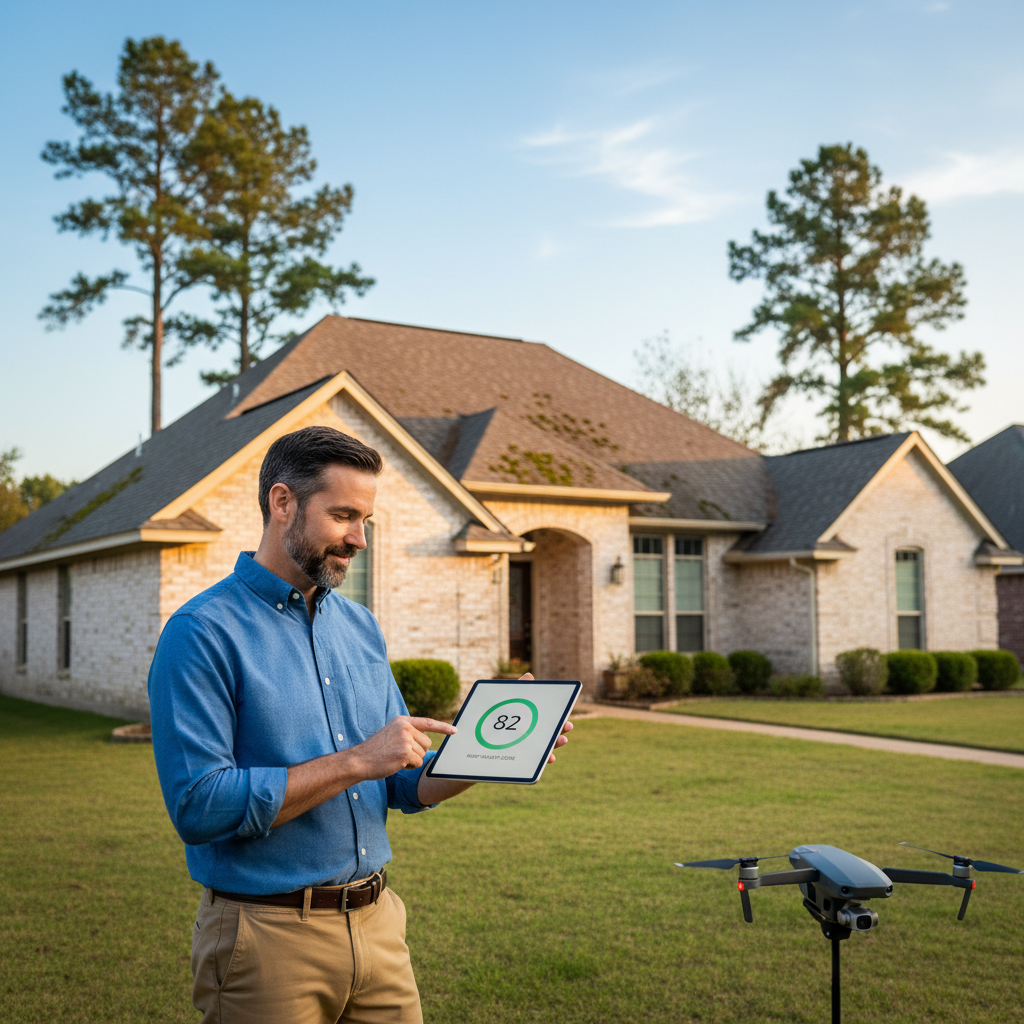
Most homeowners don't think about their roof until water starts coming through the ceiling. By then, a small, fixable problem has usually turned into an expensive one. A roof health score changes that — giving you a clear, ongoing picture of your roof's condition so you can act early instead of react late.
What Is a Roof Health Score?
A roof health score is a single number — typically on a scale of 0 to 100 — that summarizes the overall condition of your roof based on a professional inspection. Think of it like a credit score or a car's diagnostic readout, but for the structure protecting everything inside your home.
Instead of handing you a dense, 40-page PDF filled with technical language, a roof health score distills what the inspector found into one easy-to-read number, backed by clear notes and photos.
- 80–100: Your roof is in good shape. Keep up routine maintenance.
- 60–79: Some wear is present. Monitor closely and plan ahead.
- Below 60: Issues need attention soon to avoid larger damage.
With Full Armor HomeIQ's RoofIQ score, a vetted local inspector evaluates your roof, and the results are turned into a standardized score you can actually understand, track, and share. You can learn more about how a RoofIQ score is calculated and what it really means compared to a traditional inspection PDF.
Why a Number Is More Useful Than a Long Report
Traditional inspection reports have their place, but most homeowners don't read them cover to cover. Important findings get buried. Recommendations get forgotten. And when it's time to sell or file a claim, you're scrambling to find the paperwork.
A roof health score solves that by giving you:
- Instant clarity. You know in seconds whether your roof is in great shape or needs attention.
- A shareable format. One secure link lets you share your score with a buyer, lender, or insurance adjuster — no printing, no attachments.
- A record over time. Year after year, your score history shows trends — whether your roof is holding steady or declining — so you can plan maintenance and budget accordingly.
If you've ever tried to explain the condition of your roof during a home sale without any documentation, you understand why having a clean, credible report matters. A shareable roof condition report can even help speed up your closing.
Why Every Homeowner Needs One
1. You Can't Manage What You Can't Measure
Most roof problems — cracked flashing, granule loss, lifted shingles — develop slowly and quietly. By the time you spot them from the ground, they've often already caused hidden damage. A professional inspection with a scored result gives you an objective baseline, not just a gut feeling.
If you're not sure what warning signs to watch for in between inspections, our guide to 5 warning signs your roof needs attention is a good starting point.
2. Texas Weather Is Hard on Roofs
If you own a home in East Texas, the Dallas–Fort Worth area, Tyler, Longview, or Nacogdoches, you already know the weather doesn't let up. Hail, high winds, heavy rain, and summer heat all chip away at your roof year-round. Texas hail and storms cause damage that builds up gradually, which makes regular, scored inspections especially important here.
For a seasonal plan, check out the Texas storm-season roof maintenance checklist.
3. It Protects Your Home's Value
When it's time to sell or refinance, a documented roof health score tells the story of a well-maintained home — without leaving buyers or appraisers guessing. Sellers who can show a strong, current RoofIQ score often have a smoother path to closing. Learn how a strong RoofIQ score can support your home's resale value.
4. It Builds a Year-Over-Year Maintenance History
One inspection is a snapshot. A series of scored inspections over time is a story — one that proves your home has been cared for. That kind of documented history is valuable when you're selling, refinancing, or dealing with an insurance adjuster after a storm. Building a year-over-year maintenance history is one of the smartest things a homeowner can do.
5. It Takes the Guesswork Out of Hiring
One of the biggest friction points for homeowners isn't the inspection itself — it's finding someone trustworthy to do it. Full Armor HomeIQ matches you with vetted local inspection companies, handles scheduling, and delivers a standardized score. Whether you're in Tyler, Longview, or anywhere in East Texas, finding a trustworthy roofing inspector doesn't have to be stressful.
How Often Should You Get a Roof Health Score?
For most homeowners, once a year is a reasonable baseline — especially before or after storm season. You may want to schedule an inspection sooner if you've had recent severe weather, you're preparing to sell, or it's been more than two years since your last professional look. Our guide on how often to get your roof inspected walks through the factors to consider.
The Bottom Line
A roof health score isn't just a number — it's peace of mind, a maintenance record, and a selling tool all in one. For Texas homeowners dealing with unpredictable weather and rising repair costs, knowing exactly where your roof stands is one of the most practical things you can do to protect your home and your budget.
Ready to stop guessing and start knowing? Get your RoofIQ Score today and see where your roof stands — in plain language, with a clear number you can track and share.
Frequently Asked Questions
Written by Full Armor HomeIQ Team
The Full Armor HomeIQ team helps homeowners understand and track their home's condition — starting with the roof.
Get Your RoofIQ Score
Contact Full Armor HomeIQ for a free inspection and consultation.
Get a Free Quote