
How Texas Hail and Storms Damage Your Roof Over Time
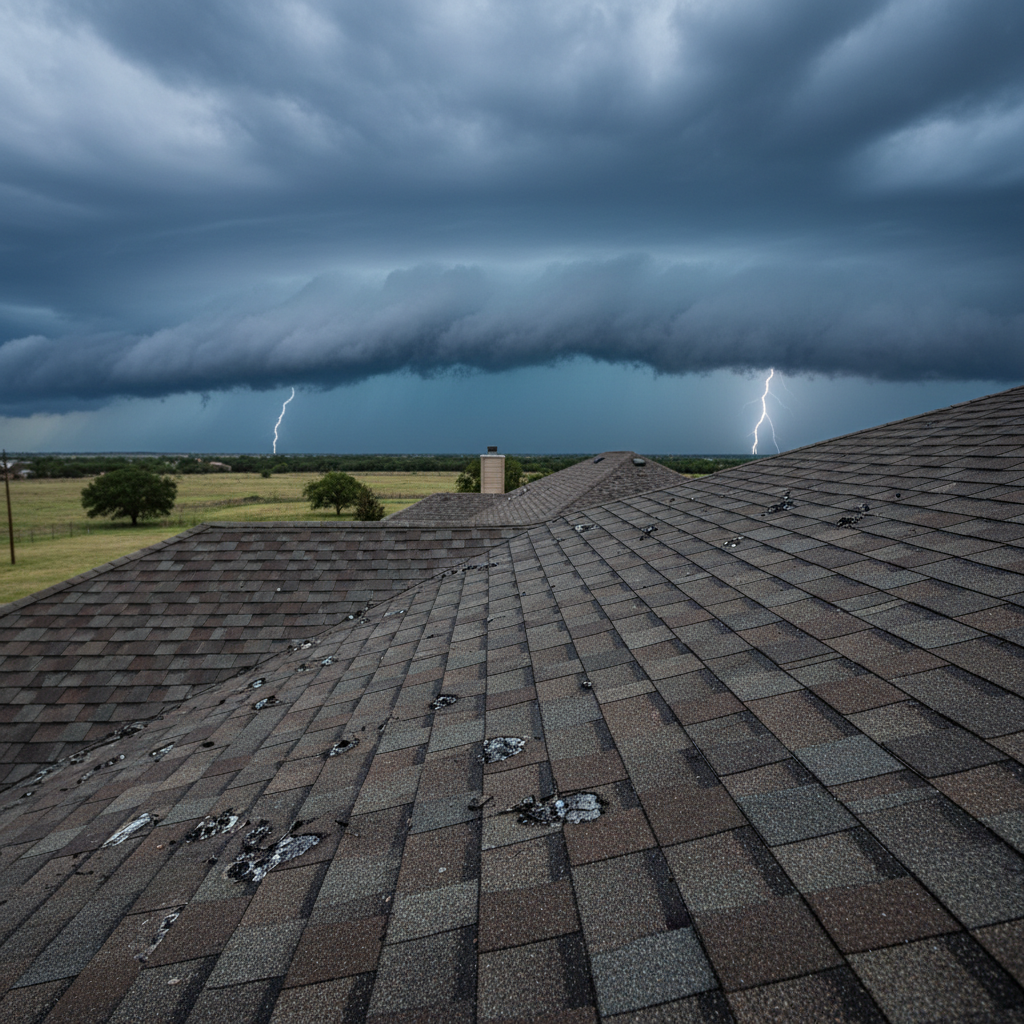
Texas weather is not gentle on roofs. Between spring hailstorms, summer thunderstorms, and the occasional tropical system pushing inland from the Gulf, your roof absorbs a serious beating year after year. The problem is that most of the damage happens gradually — a little at a time — until one season the bill arrives all at once.
Understanding how storms damage your roof over time is one of the most important things a Texas homeowner can do to protect their home and their wallet.
The Cumulative Nature of Storm Damage
Here's what many homeowners don't realize: a single hailstorm rarely destroys a roof outright. Instead, it weakens it. The next storm weakens it a little more. Over three or four storm seasons, what started as minor granule loss or a few cracked shingles quietly turns into water intrusion, rot, and structural problems.
This is called cumulative storm damage, and it's one of the most common — and most costly — patterns we see in East Texas and across the state.
Because each individual event seems minor, many homeowners skip the inspection. By the time visible symptoms appear inside the home (water stains, soft spots, musty smells), the damage is already expensive.
What Hail Actually Does to Shingles
When a hailstone strikes an asphalt shingle, it does a few things depending on its size and velocity:
- Knocks loose granules — those small grit-like particles that protect the asphalt layer beneath
- Creates micro-fractures in the shingle's structure, even when no visible crack appears
- Bruises the mat underneath the surface, weakening the shingle's flexibility and lifespan
- Damages flashing and seals around vents, chimneys, and skylights
A shingle that has lost significant granule coverage is far more vulnerable to UV damage, heat cracking, and water absorption — all of which are abundant in Texas.
Small hail (under one inch) may leave no obvious marks at all, but repeated small hail events compound into real material degradation over time.
How Wind and Rain Worsen the Problem
Hail is just part of the equation. Texas storms frequently bring sustained high winds that:
- Lift shingle edges and break the adhesive seal between shingles
- Tear off individual shingles or whole sections in severe cases
- Drive rain sideways under shingle edges, especially where seals are already compromised from previous hail events
- Push debris — branches, leaves, standing water — against the roof surface, accelerating decay
When wind damage and hail damage exist together on the same roof, the vulnerabilities multiply quickly. Water finds every unsealed edge and micro-crack that the hail opened up.
If you want to know what inspectors look for after a major event, see After a Texas Hail Storm: What to Do First (and How to Document Your Roof's Condition the Right Way).
Why Texas Is Especially High Risk
Texas sits inside a region meteorologists sometimes call the "hail belt" — a zone where conditions frequently produce large, damaging hailstones. East Texas, Dallas, Tyler, Longview, and Nacogdoches all experience multiple significant hail and thunderstorm events in a typical year.
Add to that the intense summer heat and high humidity that East Texas is known for, and you have a climate that accelerates roof aging from multiple directions at once. Shingles that might last 25 years in a mild climate can degrade meaningfully faster when exposed to repeated storm cycles and extreme temperature swings.
The Problem With Waiting for Obvious Symptoms
Most homeowners notice roof trouble only after water has already entered the home. By that point, damage typically extends beyond just the roofing material — it can involve decking, insulation, and interior finishes.
The smarter approach is to track your roof's condition before problems become emergencies. That means getting a professional inspection after significant storms and keeping a clear record of your roof's condition over time — not just a single report you file away and forget.
See 5 Warning Signs Your Roof Needs Attention and Your Roof Is Trying to Tell You Something: 5 Warning Signs East Texas Homeowners Miss Every Spring to know what to watch for between inspections.
How a Roof Health Score Changes the Picture
A single inspection report can tell you your roof's condition today. But what tells you whether your roof is getting better, holding steady, or slowly declining?
That's exactly what a RoofIQ Score is built for. After a professional inspection, your roof receives a clear 0–100 score based on its actual condition — not a 40-page PDF filled with technical language that's hard to act on. Over time, as you schedule inspections after storms or on a regular maintenance cycle, your score history shows you the trend.
A score that drops from 82 to 71 after two storm seasons tells a clear story. It's documentation you can use when talking to a roofing professional, and it's shareable when you're selling or refinancing your home.
Learn more: What Is a RoofIQ Score — and How Is It Calculated? and Why Tracking Your Home's Condition Over Time Can Save You Thousands
What You Can Do Right Now
If your roof has been through one or more significant Texas storm seasons without a professional inspection, here's a simple starting point:
- Schedule a professional inspection — especially if it's been more than a year or you've had hail in your area
- Document your roof's condition so you have a baseline for future comparisons
- Don't wait for interior symptoms — surface damage is far cheaper to address than structural water damage
- Keep your report somewhere accessible — not buried in a filing cabinet
Need help finding a trusted local inspector? How to Find a Trustworthy Roofing Inspector in East Texas is a good place to start.
Texas storms aren't going anywhere — but roof damage doesn't have to catch you off guard. Get Your RoofIQ Score today and start tracking your roof's health with a clear, simple score backed by a professional inspection. Whether you're in Tyler, Longview, Nacogdoches, or anywhere across East Texas, Full Armor HomeIQ connects you with vetted local inspection companies and turns the results into a report you can actually use.
Frequently Asked Questions
Written by Full Armor HomeIQ Team
The Full Armor HomeIQ team helps homeowners understand and track their home's condition — starting with the roof.
Get Your RoofIQ Score
Contact Full Armor HomeIQ for a free inspection and consultation.
Get a Free Quote