What Is a Roof Health Score and Why Every Homeowner Needs One
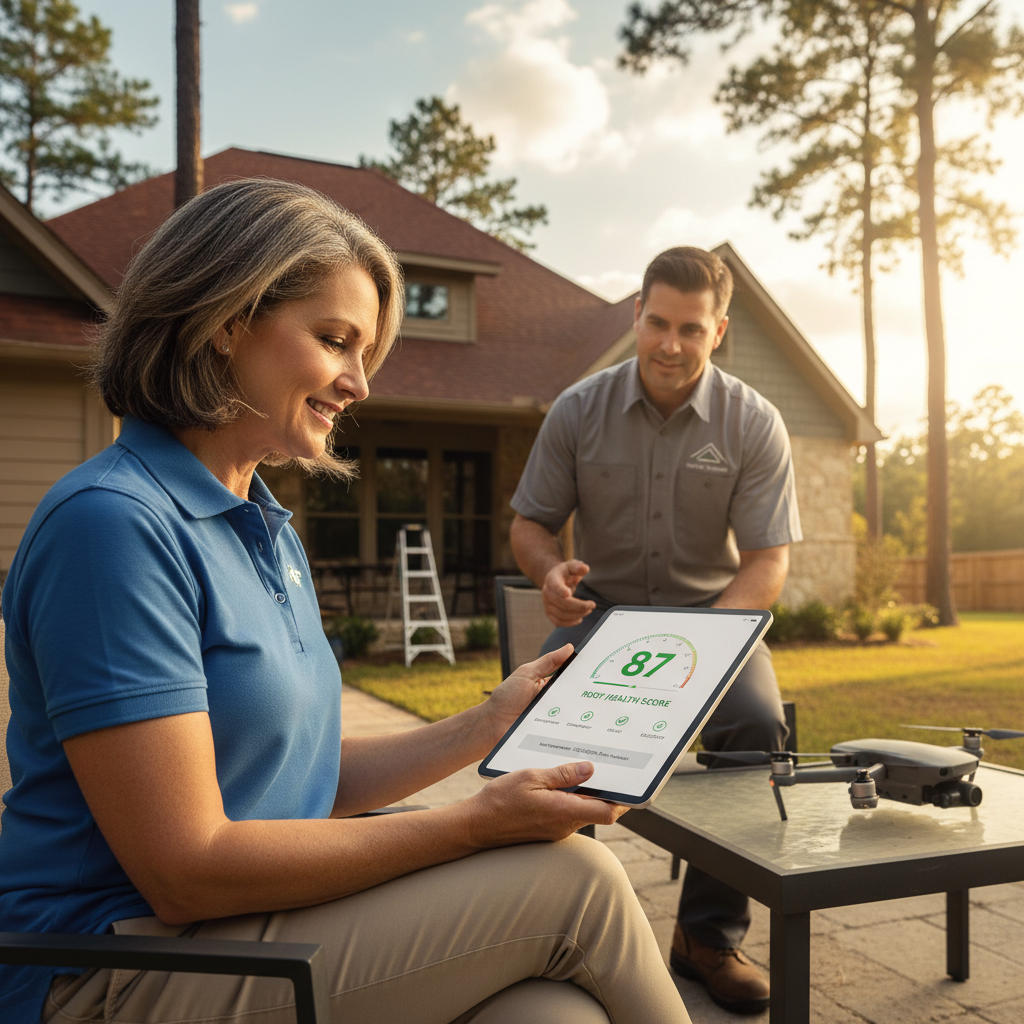
Most homeowners have no idea what condition their roof is in — until a leak shows up on the ceiling or an adjuster asks for documentation they don't have. A roof health score is designed to fix that problem by turning a professional inspection into a single, easy-to-read number.
Here's what it is, how it works, and why it's quickly becoming something every homeowner should have on file.
What Is a Roof Health Score?
A roof health score is a number — typically on a 0 to 100 scale — that summarizes the overall condition of your roof based on a professional inspection. Instead of handing you a lengthy PDF packed with technical language, a score gives you an at-a-glance answer to the question: How is my roof doing right now?
Think of it like a credit score for your roof. A high number means things look solid. A lower number means it's time to pay attention. And like a credit score, it's most useful when you track it over time.
If you want to dig into exactly how this number is calculated, check out What Is a RoofIQ Score — and How Is It Calculated?.
Why a Number Beats a 40-Page PDF
Traditional roof inspection reports are detailed — sometimes impressively so. But detail isn't always clarity. A document filled with industry terms, measurements, and photo grids doesn't tell a busy homeowner what they actually need to know: Is my roof okay? Do I need to do something?
A health score cuts through that noise:
- Immediate understanding — You don't need roofing experience to know that an 82 is better than a 54.
- Easy to share — Whether you're talking to a contractor, a buyer, or an insurance contact, one number travels well.
- Actionable — A score paired with a short summary makes it clear what to watch, what to fix, and when to reinspect.
For a deeper look at why this format is gaining traction, read What Does a Roof Health Score Actually Mean — and Why It Beats a 40-Page Inspection PDF.
What Goes Into the Score?
A legitimate roof health score is based on a real, in-person inspection by a qualified professional — not an algorithm guessing from satellite imagery. Inspectors evaluate several key areas:
- Shingle condition — granule loss, curling, cracking, or missing sections
- Flashing integrity — around chimneys, vents, and roof-wall transitions
- Gutters and drainage — blockages, sagging, or improper slope
- Decking and structure — soft spots or signs of moisture intrusion
- Ventilation — attic airflow that affects long-term roof performance
Each factor contributes to the final score, giving you a complete picture rather than a guess.
Why Tracking It Over Time Is the Real Value
A single inspection is useful. A history of scores is powerful.
When you get your roof scored annually — or after a major storm — you build a year-over-year record of your roof's condition. That record helps you:
- Catch gradual decline early, before small issues become expensive repairs
- Document condition changes after Texas hail or severe weather
- Show proof of maintenance when selling, refinancing, or filing a claim
Texas weather is hard on roofs. Between hailstorms, high winds, and the heat cycle that East Texas homeowners know well, your roof takes a beating every year. A trending score shows you how much it's been affected — and whether last year's repairs actually held. Learn more about how storms affect your roof over time in How Texas Hail and Storms Damage Your Roof Over Time.
For a practical guide to building that maintenance history, see How to Build a Year-Over-Year Maintenance History for Your Home.
When a Roof Health Score Really Pays Off
Your score isn't just useful for maintenance planning. Here are three moments when having one on file makes a real difference:
Selling Your Home
Buyers get nervous about roofs. A documented score — especially a strong one — gives them confidence and can reduce back-and-forth during negotiations. A shareable report adds credibility that a verbal "the roof is fine" simply can't match. See Should You Get a Roof Inspection Before Listing Your Home in Texas? for more on how this plays out in a Texas sale.
Refinancing
Lenders increasingly want to know a home's condition. A current roof health score is a clean, professional way to demonstrate your property is well-maintained.
After a Storm
Having a pre-storm score on record gives you a clear baseline. If something changes after a weather event, you have documentation to support the conversation with your insurer — no guessing about what was pre-existing.
If you're not sure whether your roof is showing warning signs right now, 5 Warning Signs Your Roof Needs Attention is a good place to start.
Who Does the Inspection?
This matters. A roof health score is only as reliable as the inspector behind it. Full Armor HomeIQ connects homeowners in Texas — including East Texas communities like Longview, Tyler, and Nacogdoches — with vetted local inspection professionals who follow a standardized process. That means your score means the same thing whether you get inspected this year or three years from now.
Not sure how to find someone you can trust? How to Find a Trustworthy Roofing Inspector in East Texas walks you through what to look for.
A Simple Tool for a Big Investment
Your roof is one of the most expensive components of your home — and one of the easiest to neglect until it's too late. A roof health score gives you a straightforward way to stay ahead of problems, document your home's condition, and make smarter decisions at every stage of homeownership.
Ready to know where your roof stands? Get your RoofIQ Score today and have a clear, trackable record of your roof's condition — starting now.
Frequently Asked Questions
Written by Full Armor HomeIQ Team
The Full Armor HomeIQ team helps homeowners understand and track their home's condition — starting with the roof.
Get Your RoofIQ Score
Contact Full Armor HomeIQ for a free inspection and consultation.
Get a Free Quote