What Is a Roof Health Score and Why Every Homeowner Needs One
Most homeowners never think about their roof — until something goes wrong. A leak shows up during a Texas downpour. Shingles blow off after a hailstorm. The insurance adjuster asks for documentation you don't have. By then, the problem is already expensive.
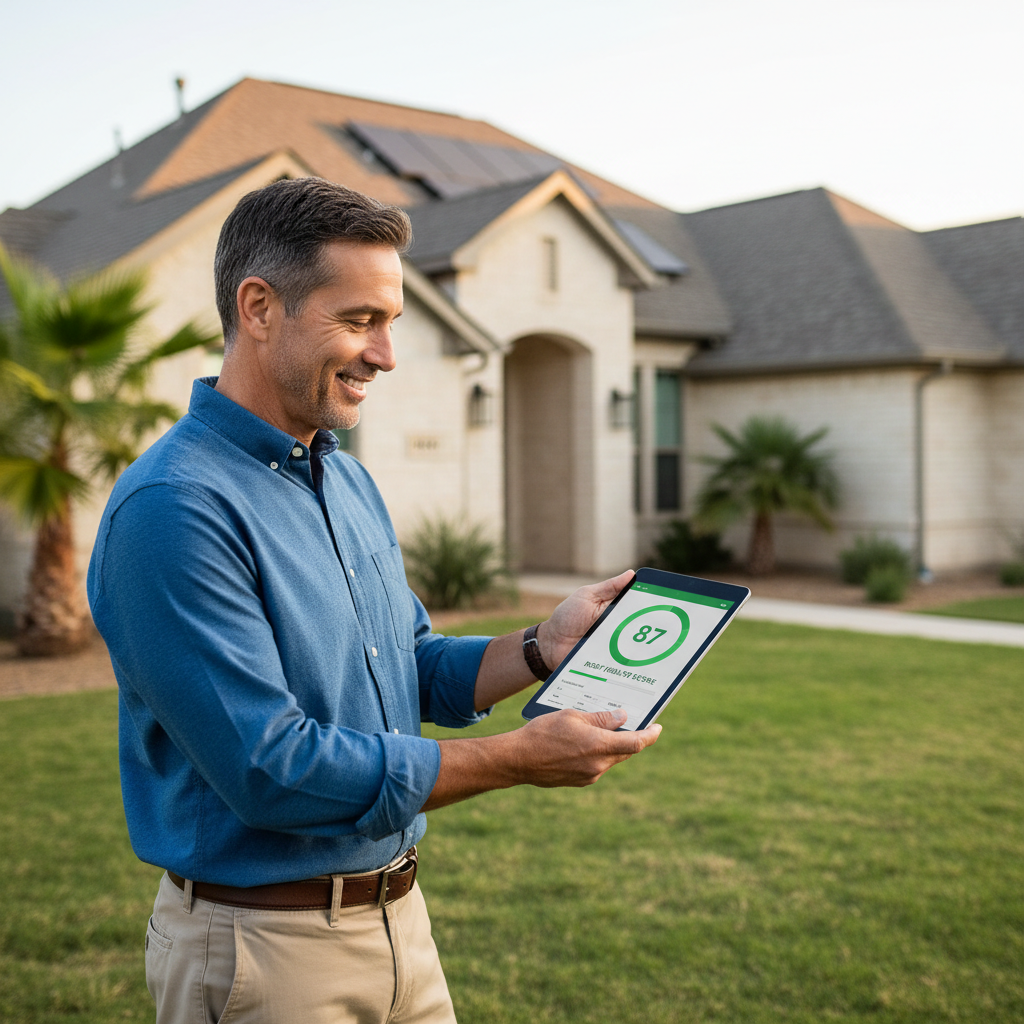
A roof health score changes that. It gives you a clear, simple number that tells you the condition of your roof right now — and tracks how that condition changes over time.
What Is a Roof Health Score?
A roof health score is a single number, usually on a 0–100 scale, that represents the overall condition of your roof based on a professional inspection. Think of it like a credit score for your roof.
Instead of handing you a confusing 40-page PDF full of inspector shorthand, a roof health score takes all of those findings — shingle condition, flashing integrity, drainage, signs of wear, storm damage, and more — and translates them into one easy-to-read number.
- 80–100: Roof is in strong condition
- 60–79: Moderate wear; maintenance may be needed
- Below 60: Significant concerns that deserve prompt attention
This isn't a guess or an algorithm based on satellite photos. It comes from a licensed professional who physically inspects your roof and enters structured findings into a system that generates your score. You can read more about exactly how that works in What Is a RoofIQ Score — and How Is It Calculated?.
Why a Number Is More Useful Than a Long Report
Traditional inspection reports are written for inspectors, not homeowners. They're long, technical, and easy to misread — or ignore entirely.
A roof health score flips that. You get:
- Instant clarity. You know at a glance whether your roof is in good shape or needs attention.
- Easy comparison over time. Did your score drop 8 points after last spring's storms? That trend tells you something important.
- Something shareable. When you're selling your home, refinancing, or filing a claim, a clean, professional score report is far more useful than a stack of PDFs.
If you've ever wondered why the standard inspection report format falls short, What Does a Roof Health Score Actually Mean — and Why It Beats a 40-Page Inspection PDF goes deeper on this.
Why Every Homeowner Needs One
1. Roof problems don't announce themselves
Most roof damage builds slowly — a little granule loss here, a small flashing gap there. By the time you notice a stain on your ceiling, the underlying problem has usually been growing for months. Regular scoring gives you a baseline and catches deterioration early, before it becomes a costly repair.
If you're in Texas, hail and storm seasons accelerate that wear significantly. How Texas Hail and Storms Damage Your Roof Over Time explains how cumulative weather events affect your roof in ways that aren't always visible from the ground.
2. You build a documented history
One inspection is a snapshot. A score tracked year over year is a story — and that story has real value. Lenders, buyers, and insurers all respond better to documented maintenance history than to a homeowner's word.
Why Tracking Your Home's Condition Over Time Can Save You Thousands covers exactly why that paper trail matters.
3. It makes selling or refinancing smoother
If you're listing your home in Texas, a strong RoofIQ score and a clean shareable report can be a genuine advantage. Buyers feel more confident. Agents have something concrete to point to. Deals move faster.
See how that plays out in practice: Should You Get a Roof Inspection Before Listing Your Home in Texas? and Selling Your Home in Texas? Here's How a Shareable Roof Condition Report Can Speed Up Closing.
4. It helps you find and trust the right contractor
Knowing your score is one thing. Knowing who to call if it's low is another. Getting matched with a vetted local roofing professional — not just whoever shows up in an ad — means you're working with someone who has already been screened and whose work is part of a consistent, standardized process.
If you're in East Texas, How to Find a Trustworthy Roofing Inspector in East Texas and What to Look for When Hiring a Roof Inspector in Tyler or Longview, TX are worth reading before you schedule anything.
What Goes Into a Roof Health Score?
Every roof inspection that generates a RoofIQ score covers the components that actually determine how long your roof will last and how well it protects your home:
- Shingles and surface materials — granule loss, cracking, curling, missing pieces
- Flashing — around chimneys, vents, and valleys where leaks commonly start
- Gutters and drainage — clogs, slope issues, and water management
- Structural integrity — sagging, soft spots, and decking concerns
- Ventilation — attic airflow that affects how fast materials age
- Storm or impact damage — hail hits, wind uplift, debris damage
Each finding is weighted and combined into your final 0–100 score. It's objective, repeatable, and built to be compared against your next inspection.
How Often Should You Get Scored?
For most Texas homeowners, a professional roof inspection once a year is a reasonable baseline — and after any significant storm, it's worth scheduling one promptly. How Often Should You Get a Roof Inspection? A Texas Homeowner's Guide walks through the timing in detail.
Between inspections, keep an eye out for early warning signs. 5 Warning Signs Your Roof Needs Attention is a good reference to bookmark.
Your Roof Is an Asset — Treat It Like One
Your roof protects everything underneath it. A roof health score doesn't just tell you what's wrong — it gives you a clear, ongoing picture of one of your home's most important systems, so you can make informed decisions instead of reactive ones.
Whether you're in Tyler, Longview, Nacogdoches, or anywhere across East Texas, Full Armor HomeIQ connects you with vetted local professionals who deliver a standardized inspection and a RoofIQ score you can actually use.
Ready to know exactly where your roof stands? Get your RoofIQ Score today and stop guessing.
Frequently Asked Questions
Written by Full Armor HomeIQ Team
The Full Armor HomeIQ team helps homeowners understand and track their home's condition — starting with the roof.
Get Your RoofIQ Score
Contact Full Armor HomeIQ for a free inspection and consultation.
Get a Free Quote