What Is a Home Health Score and How Is It Calculated?
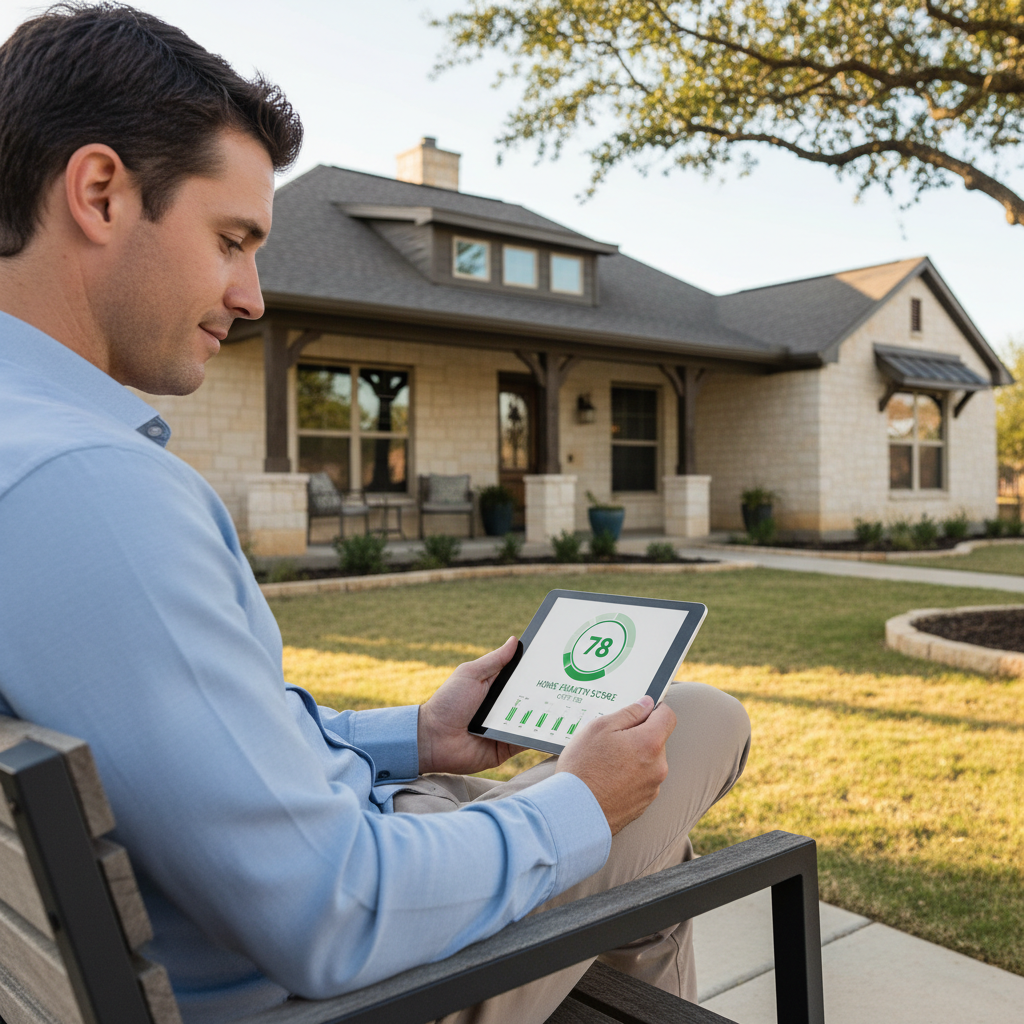
Most homeowners have no idea what their home's true condition is — not until something breaks. A roof starts leaking, a gutter collapses, or a buyer's inspector finds an issue that kills a sale. A home health score exists to change that story before it happens.
What Is a Home Health Score?
A home health score is a single number — typically on a scale of 0 to 100 — that summarizes the current condition of your home or a specific system within it. Think of it like a credit score, but for your property.
Instead of wading through a 40-page inspection PDF full of technical language and item codes, a home health score gives you one clear, easy-to-read number. Higher is better. Lower means it's time to pay attention.
At Full Armor HomeIQ, we start with the RoofIQ Score — a professional roof inspection converted into a simple roof health score, tracked over time and shareable whenever you need it. If you're curious specifically about how the roof score works, this article breaks it down in detail.
Why a Single Score Matters More Than a Long Report
Traditional inspection reports are long, confusing, and easy to forget. Most homeowners read them once — maybe — and then file them in a drawer or a downloads folder they never open again.
The problem is that a report sitting in a drawer doesn't protect your home. It doesn't remind you that your roof got a marginal rating two years ago. It doesn't flag that the issue you ignored is now worse.
A score, on the other hand, is instant and memorable. You know immediately whether you're at an 88 or a 61 — and you know which direction it's moving over time. That trend is often more valuable than the score itself.
Learn more about why a roof health score beats a 40-page PDF.
How Is a Home Health Score Calculated?
Every scoring system is a little different, but a well-built home health score is always grounded in a professional, in-person inspection — not an algorithm guessing from satellite images.
For the RoofIQ Score, a vetted local inspector evaluates your roof using standardized criteria. The score reflects factors like:
- Material condition — shingle integrity, granule loss, cracking, or curling
- Structural soundness — decking, fascia, soffit, and overall framing
- Drainage and water management — gutters, downspouts, and slope performance
- Flashing and seals — around chimneys, vents, skylights, and valleys
- Age and wear relative to expected lifespan
- Storm or impact damage — especially relevant in Texas, where hail and high winds are common
Each category is weighted and combined into a single score. The result is a clear snapshot of your roof's current health.
If you want to understand what common issues the inspector is looking for, this guide to roof warning signs is a good starting point.
What the Score Range Actually Means
Here's a simple way to read a 0–100 home health score:
- 80–100 — Good condition. Routine maintenance is all you need.
- 60–79 — Fair condition. Some items need attention. Schedule a follow-up.
- 40–59 — Poor condition. Repairs should be a near-term priority.
- Below 40 — Critical. Significant repairs likely needed. Don't wait.
Knowing where you fall helps you make smarter decisions — whether that's budgeting for repairs, timing a sale, or filing a claim after a storm.
Why Tracking Your Score Over Time Is the Real Game-Changer
A one-time score is useful. A score that you track year after year is genuinely powerful.
When you have a history of scores, you can see whether your home's condition is holding steady, gradually improving after maintenance, or slowly declining. That trend line helps you:
- Catch small problems before they become expensive ones
- Prove maintenance history to buyers or insurers
- Time repairs strategically instead of reactively
For Texas homeowners especially, where summer heat, hail seasons, and heavy storms can take a real toll, having a documented condition history is a serious advantage. See how Texas weather damages roofs over time.
And if you're wondering how often you should be getting an inspection, this guide covers the right cadence for Texas homeowners.
How a Home Health Score Helps When It Matters Most
A clean, documented score isn't just for your own peace of mind. It becomes a real asset in specific situations:
Selling your home: A strong RoofIQ Score gives buyers confidence and can reduce negotiation friction at closing. Here's how a shareable roof condition report can speed up your Texas home sale.
Refinancing: Lenders and appraisers want to know the property is in good shape. A documented condition history supports that.
After a storm: Having a pre-storm baseline score on file can help clarify what damage is new versus pre-existing when you're working through a claim.
Getting Started in Texas
Full Armor HomeIQ currently serves homeowners across East Texas — including Tyler, Longview, Nacogdoches, and surrounding communities — with plans to expand across Texas and nationwide by Fall 2026.
The process is simple: we match you with a vetted local inspector, they complete your roof inspection using a standardized process, and your RoofIQ Score is delivered in a clean, secure, shareable report. No confusing jargon. No 40-page PDF you'll never read again.
If you've been putting off a roof inspection — or if you've never had one — now is the right time to get a clear picture of where your home stands.
Ready to know your number? Get Your RoofIQ Score today and start tracking your home's health the smart way.
Frequently Asked Questions
Written by Full Armor HomeIQ Team
The Full Armor HomeIQ team helps homeowners understand and track their home's condition — starting with the roof.
Get Your RoofIQ Score
Contact Full Armor HomeIQ for a free inspection and consultation.
Get a Free Quote