What Is a Roof Health Score and Why Every Homeowner Needs One
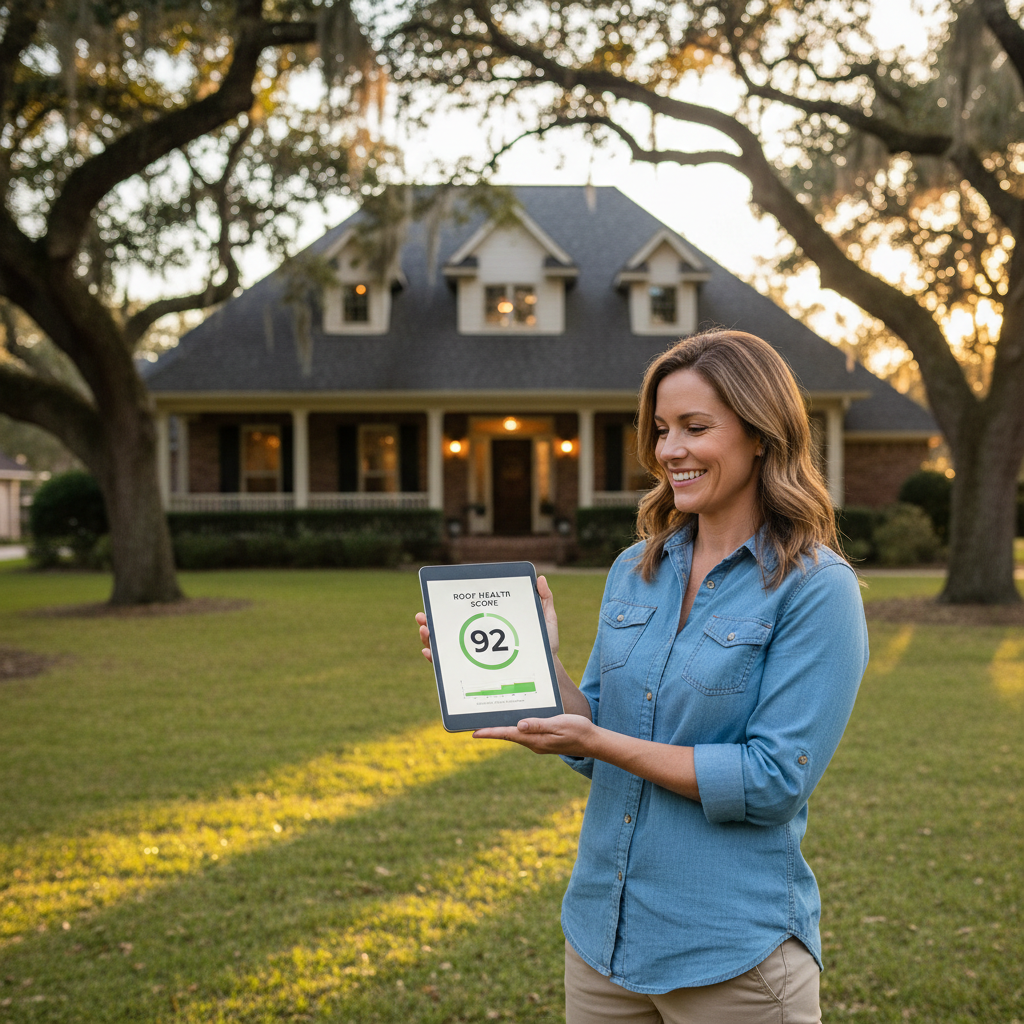
Your roof is one of the most important parts of your home, yet most homeowners have no idea what condition it's actually in — until something goes wrong. A leaking ceiling, a denied insurance inquiry, or a buyer walking away from a sale can all trace back to one uncomfortable truth: nobody was keeping track.
That's exactly the problem a roof health score is designed to solve.
What Is a Roof Health Score?
A roof health score is a single number — typically on a scale of 0 to 100 — that summarizes the overall condition of your roof based on a professional inspection. Instead of handing you a 40-page PDF packed with technical language and photos you're not sure how to interpret, a roof health score gives you one clear answer:
"Your roof is an 82 out of 100."
That number is calculated by a trained inspector who evaluates the real physical condition of your roof — things like shingle wear, flashing integrity, gutters, drainage, and signs of prior damage. The score reflects what they find.
At Full Armor HomeIQ, we call ours the RoofIQ Score. If you want to dig into exactly how it's calculated, this article walks through every factor.
Why a Number Is So Much More Useful Than a Report
Traditional inspection reports are built for inspectors — not homeowners. They're thorough, which is good, but they're also long, technical, and easy to misread or misfile.
A score changes that in a few key ways:
- It's instantly understandable. You don't need construction experience to know that a 91 is better than a 64.
- It's easy to share. Lenders, buyers, and insurers can review a clean, one-page summary without wading through a full report.
- It creates a baseline. One score by itself is useful. A score taken year over year becomes a trend — and trends tell you whether your roof is holding steady or quietly declining.
Why Tracking Your Roof Over Time Matters
Roof damage rarely happens all at once. It builds gradually — a little granule loss here, a small flashing gap there — until one storm or one bad winter turns a minor issue into an expensive repair.
If you only get a roof inspection when something looks wrong, you're already behind. But if you have a score on record from two years ago and a new score today, you can see the change. You can ask informed questions. You can plan ahead instead of reacting.
This is why Full Armor HomeIQ stores your RoofIQ history over time, giving you a clear picture of your roof's condition as it actually changes — not just a snapshot you'll forget about in six months.
Real Situations Where a Roof Health Score Makes a Difference
Selling Your Home
Buyers and their agents will ask about the roof. Having a recent, professional RoofIQ Score — with a clean, shareable report — gives you something concrete to show. It builds trust and can reduce negotiating friction. Learn more about how a strong score can support your sale in this article on RoofIQ and resale value.
Refinancing
Lenders want to know the home they're financing is in good shape. A documented roof health score gives them — and you — confidence that the property has been maintained.
After a Storm
Texas weather is no joke. After a major hail event or high-wind storm, having a pre-storm score on record creates a clear before-and-after comparison. It helps you understand what changed and gives you accurate documentation to work from. Our Texas storm-season roof maintenance checklist is a great companion resource here.
General Peace of Mind
Sometimes you just want to know your roof isn't about to become a problem. A roof health score gives you that answer without guesswork.
How Full Armor HomeIQ Makes It Simple
Here's how the RoofIQ process works:
- Schedule an inspection — We match you with a vetted local inspection company in your area. No cold calls, no wondering who to trust.
- A professional inspects your roof — A trained inspector evaluates your roof in person, on-site.
- You get your RoofIQ Score — Your results come back as a clean 0–100 score with a clear, shareable report.
- Your score is saved to your history — Come back next year, and you'll be able to see exactly how things have changed.
We're currently serving homeowners across East Texas — including the Tyler, Longview, and Nacogdoches areas — and expanding to more Texas markets through 2025 and 2026.
If you've noticed anything that seems off on your roof, don't wait. Check out these five warning signs that your roof may need attention before a small issue becomes a big one.
The Bottom Line
A roof health score isn't a gimmick — it's a smarter way to stay on top of one of the most important systems in your home. One clear number, tracked over time, backed by a professional inspection. That's it.
You don't need to become a roofing expert. You just need to know your number.
Ready to find out where your roof stands? Get your RoofIQ Score today and start tracking your roof's condition the simple way — before the next Texas storm makes the decision for you.
Frequently Asked Questions
Written by Full Armor HomeIQ Team
The Full Armor HomeIQ team helps homeowners understand and track their home's condition — starting with the roof.
Get Your RoofIQ Score
Contact Full Armor HomeIQ for a free inspection and consultation.
Get a Free Quote