
How Texas Hail and Storms Damage Your Roof Over Time
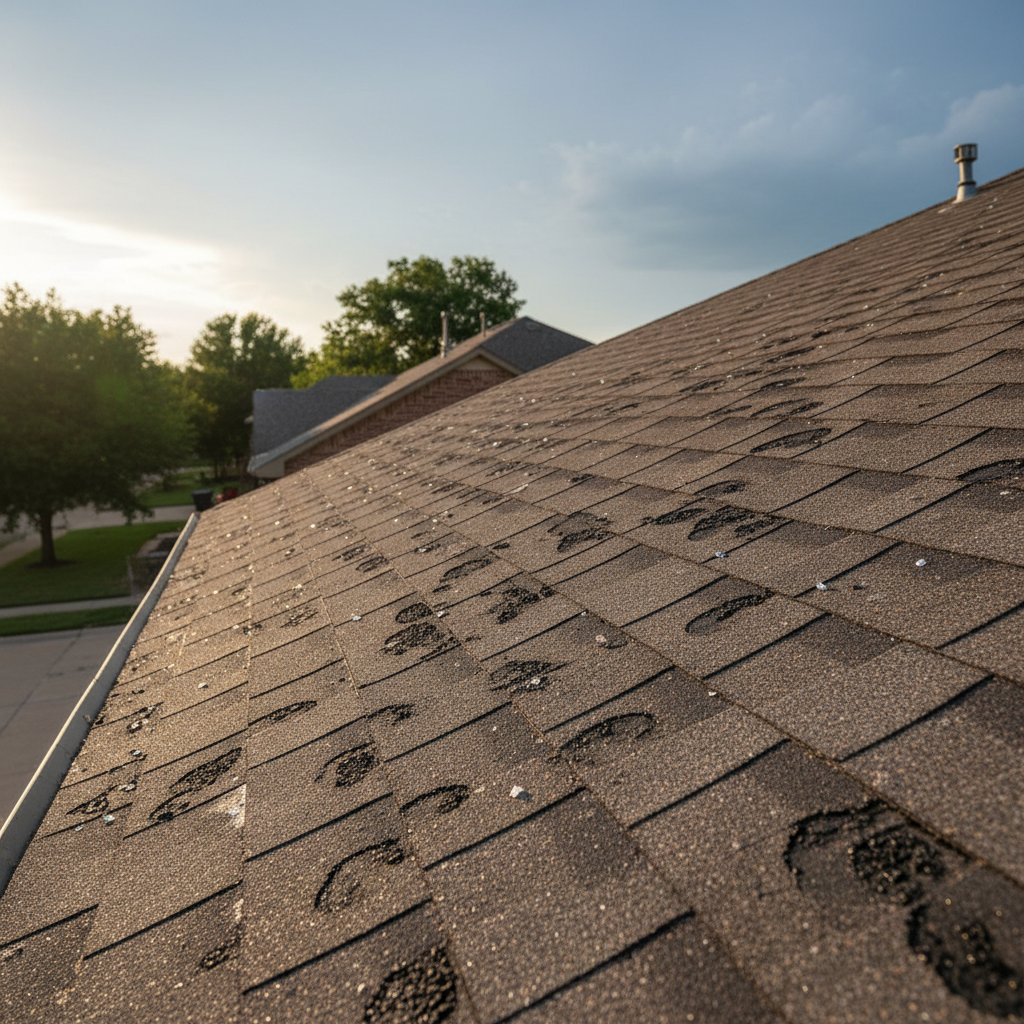
Texas weather is not gentle. From springtime hail in the Piney Woods to late-summer thunderstorms rolling across the Dallas-Fort Worth corridor, roofs across the state take a beating that builds up year after year. The problem is that most of that damage is invisible from the ground — until it isn't.
Understanding how Texas hail and storms damage your roof over time is the first step toward protecting one of your biggest investments.
It's Not Just One Storm — It's the Accumulation
Homeowners often think about storm damage as a single event: a big hail storm hits, something breaks, you file a claim, and it's fixed. But roof damage doesn't always work that way.
Here's what actually happens over multiple storm seasons:
- Granule loss from hail — Even small hailstones knock protective granules off asphalt shingles. Each hit removes a little more. Over time, the underlying mat is exposed and begins to deteriorate faster.
- Micro-cracks from impact — Hail that doesn't visibly dent a shingle can still fracture the mat beneath the surface. These hairline cracks let moisture in slowly.
- Lifted and cracked shingles from wind — High winds break the seal strips on shingles, allowing them to lift, curl, or crack. Once the seal is compromised, the next storm has an even easier time.
- Debris impact damage — East Texas storms in particular bring falling branches and pine needles that can scrape granules, puncture shingles, or hold moisture against the roof surface for days.
- Flashing and sealant wear — The metal flashing around chimneys, vents, and skylights is another storm target. Repeated stress cycles loosen joints and crack sealants, creating leak pathways that aren't obvious until water appears on your ceiling.
None of these failures announce themselves loudly. They show up quietly, one storm at a time.
What East Texas Weather Adds to the Equation
East Texas — including the Tyler, Longview, and Nacogdoches areas — sits in a climate zone where roofs face a particularly demanding combination: hail-producing spring storms, intense summer heat and UV exposure, high humidity, and occasional ice events in winter.
That humidity alone accelerates everything. Moisture trapped under lifted shingles or in micro-cracks feeds algae, mold, and wood rot in the decking beneath. When storm damage opens the door, humidity walks right in.
If you want to understand how heat and humidity compound the problem between storms, our companion article on how humidity and heat in East Texas shorten your roof's lifespan goes deeper on that side of the equation.
Why the Damage Stays Hidden So Long
Most roof damage from hail and storms isn't visible from the ground. You'd need to get on the roof — or send a trained professional up there — to see granule loss patterns, micro-cracks, or compromised flashing.
That's exactly why so many Texas homeowners only discover a problem when:
- Water stains appear on interior ceilings
- A major storm causes a visible collapse or leak
- An appraiser flags roof condition during a refinance or sale
At that point, what might have been a manageable maintenance issue has often become a much larger repair. These five warning signs are worth reviewing — some are subtle enough that many homeowners miss them until the damage is advanced.
The Case for Tracking Roof Condition Over Time
A single inspection snapshot is useful, but it only tells you where things stand today. What tells a more complete story is a trend — how your roof's condition has changed from one inspection to the next.
That's the idea behind a roof health score: instead of handing you a 40-page PDF full of technical language, a standardized 0–100 score gives you a clear, trackable number. If your score drops between inspections, you know the roof is declining and you can act early. If it stays steady, you have documented proof your roof is being maintained.
This kind of year-over-year record matters whether you're protecting your home, planning to sell, or refinancing. Learn more about why tracking your home's condition over time can save you thousands.
What a Professional Inspection Actually Catches
A qualified inspector looking at your roof after a Texas storm season is checking for things most homeowners simply can't assess safely or accurately on their own:
- Hail strike patterns and density — inspectors can estimate hail size and coverage area from the damage pattern
- Granule loss severity — how much protective material remains on the shingles
- Shingle integrity — cracking, bruising, curling, or missing tabs
- Flashing condition — separation, rust, or gaps around penetrations
- Decking and underlayment — whether moisture has reached the structural layers
- Gutter and drainage health — clogs or damage that trap water against the roofline
Want a complete breakdown? See what a professional roof inspection actually includes.
How Often Should Texas Homeowners Inspect?
In a state with Texas weather, most roofing professionals suggest at minimum an annual inspection — and an additional check after any significant storm event. The roof inspection frequency guide for Texas homeowners walks through how to think about timing based on your roof's age and your local storm history.
If you're not sure where to start, our Texas storm-season maintenance checklist is a practical place to begin.
Know Your Roof's Score — Before the Next Storm
Texas hail and storms aren't going anywhere. But discovering damage after the fact — when it's already expensive — doesn't have to be your only option.
A professional RoofIQ inspection connects you with a vetted local inspector in East Texas or elsewhere in the state, produces a clear 0–100 roof health score, and keeps a secure record you can track over time, share with a buyer, or reference when you need it most.
Get Your RoofIQ Score today and know exactly where your roof stands — before the next storm makes that question urgent.
Frequently Asked Questions
Written by Full Armor HomeIQ Team
The Full Armor HomeIQ team helps homeowners understand and track their home's condition — starting with the roof.
Get Your RoofIQ Score
Contact Full Armor HomeIQ for a free inspection and consultation.
Get a Free Quote