
How Texas Hail and Storms Damage Your Roof Over Time
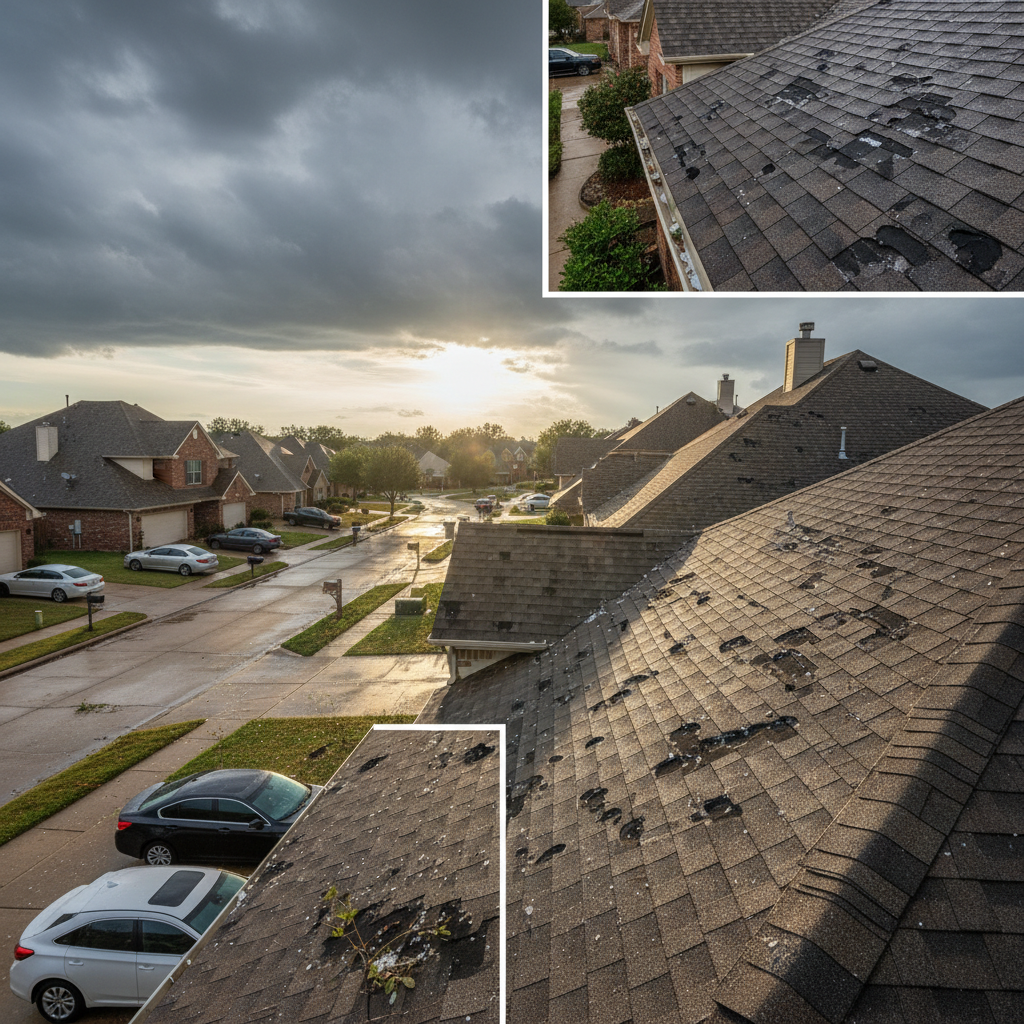
Texas weather is relentless. From spring hailstorms rolling across the Piney Woods to late-summer thunderstorms pounding rooftops in Tyler, Longview, and Nacogdoches, East Texas homeowners face some of the most punishing roof conditions in the country. The tricky part? Most of the damage doesn't happen all at once — it builds up slowly, storm by storm, year after year.
Understanding how that cumulative wear happens is the first step toward protecting one of your home's most important assets.
The Hail Problem: Small Dents, Big Consequences
Hail is one of the most common causes of roof damage across Texas. And while a baseball-sized hailstone makes headlines, it's the smaller, more frequent events that catch most homeowners off guard.
When hailstones strike asphalt shingles, they knock away the protective granule layer — those tiny sand-like particles embedded in the surface. You may not see it happening, but over multiple storms, the granule loss adds up. Once those granules are gone:
- UV exposure accelerates: The asphalt underneath bakes in the Texas sun, becoming brittle faster than it should.
- Water infiltration increases: Thin or cracked asphalt can't shed water the way it's designed to.
- Lifespan shrinks: A roof that might last 25 years under normal conditions can lose years of useful life after repeated hail events.
What makes this especially frustrating for Texas homeowners is that the damage is often invisible from the ground. You might not notice anything wrong until water is already finding its way inside.
Wind Damage: The Slow Unsealing of Your Roof
Texas thunderstorms frequently produce strong, sustained winds — and even gusts that don't rise to tornado level can lift shingle edges, break the adhesive seal strips that hold shingles flat, and pull up flashing around vents, chimneys, and skylights.
Once a shingle's seal is broken or a flashing joint is compromised, every subsequent rainstorm becomes an opportunity for water to sneak underneath. Over time, that moisture can:
- Saturate and rot the roof decking beneath your shingles
- Encourage mold and mildew growth in your attic
- Damage insulation and ceiling materials
- Lead to costly structural repairs that go well beyond roofing
The challenge is that a lifted shingle can sometimes reseal itself in warm weather, masking the problem — until the next storm reopens it again.
Rain and Ponding: When Water Has Nowhere to Go
East Texas is no stranger to heavy, sustained rainfall. When gutters are clogged or a roof's drainage design is compromised by previous damage, water can pool in low spots rather than running off cleanly. Even shallow ponding puts steady pressure on roofing materials and seams.
Over multiple seasons, this repeated moisture exposure leads to:
- Algae and moss growth, which further traps moisture and degrades shingles
- Seam and valley failures where two roof planes meet
- Fascia and soffit rot that affects the edge of your entire roof system
If you've noticed dark streaking on your shingles or gutters pulling away from your roofline, those are worth taking seriously. Check out our article on 5 Warning Signs Your Roof Needs Attention for a closer look at what to watch for.
Why Cumulative Damage Is So Easy to Miss
Here's the core problem with storm damage in Texas: no single event looks catastrophic, so it's easy to assume everything is fine. You check the roof after a hailstorm, don't see any obvious holes, and move on.
But roofs don't fail all at once. They degrade across dozens of small events — each one removing a little more granule protection, weakening a few more adhesive bonds, or allowing a little more moisture to creep under the surface.
Without a consistent record of your roof's condition over time, there's no way to see that trend. You're essentially flying blind until something goes wrong.
This is exactly the problem that a RoofIQ Score is designed to solve. Instead of a single inspection snapshot buried in a 40-page PDF, your RoofIQ gives you a clear 0–100 score that tracks your roof's health across inspections — so you can actually see how each storm season is affecting your home.
What Consistent Inspections Actually Tell You
A professional roof inspection after significant weather events does more than confirm obvious damage. A trained inspector looks at:
- Granule loss patterns that indicate impact zones across the roof surface
- Shingle integrity and seal adhesion along edges and ridges
- Flashing condition around every penetration point
- Gutter and drainage performance relative to the roof slope
- Decking integrity where it can be assessed from the attic
When those findings are translated into a consistent, scored report over time, you start building something genuinely valuable: a documented history of your roof's condition. That history matters when you're selling your home, refinancing, or simply trying to make smart maintenance decisions before small problems become expensive ones.
For a full breakdown of what responsible storm-season upkeep looks like, our Texas Storm-Season Roof Maintenance Checklist walks through the key steps.
The Long-Term Value of Knowing Your Roof's Trend
Roofs in Texas don't get easier to maintain as they age — they get harder. The good news is that a well-documented roof with a strong condition history is a real asset. It gives you leverage when selling, confidence when refinancing, and a clear picture when deciding whether to repair or replace.
Learn more about how that documented history works in your favor: How a Strong RoofIQ Score Boosts Your Home's Resale Value.
If your roof has been through a Texas storm season — or several — it deserves more than a quick visual check. Get a professional inspection, get a score you can actually understand, and start building the kind of roof history that protects your home for years to come.
Get your RoofIQ Score today and connect with a vetted local inspection company in East Texas or anywhere across the state.
Frequently Asked Questions
Written by Full Armor HomeIQ Team
The Full Armor HomeIQ team helps homeowners understand and track their home's condition — starting with the roof.
Get Your RoofIQ Score
Contact Full Armor HomeIQ for a free inspection and consultation.
Get a Free Quote