
How Texas Hail and Storms Damage Your Roof Over Time
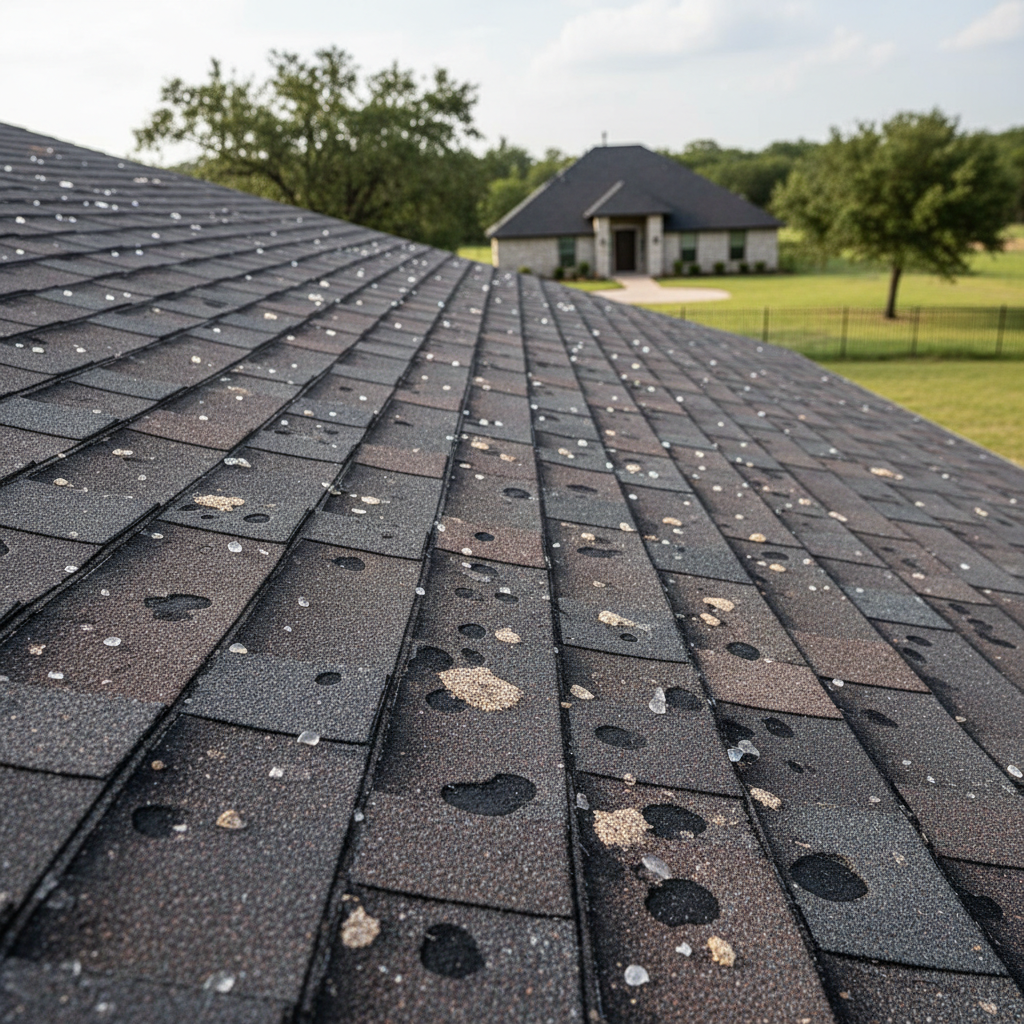
Texas is one of the most storm-intense states in the country. If you own a home here — especially in East Texas — your roof takes a beating that homeowners in milder climates simply don't experience. The tricky part? Most of that damage builds up slowly, out of sight, until one day it becomes an expensive problem.
Understanding how hail and storms damage your roof over time is the first step toward protecting one of your biggest investments.
The Hidden Toll of Texas Storm Season
Texas storm season isn't a single event — it's a prolonged stretch of repeated stress on your roofing system. From late winter through early fall, hailstorms, high winds, heavy rain, and severe thunderstorms roll through East Texas, the Dallas metro, Tyler, Longview, Nacogdoches, and communities across the state with surprising regularity.
Each storm may seem minor on its own. But the cumulative effect tells a different story.
How Hail Damages Shingles Over Time
Hail is one of the most misunderstood sources of roof damage. Homeowners often look up after a storm, see no obvious holes, and assume everything is fine. But hail damage works differently than that.
What Hail Actually Does to Asphalt Shingles
When hailstones strike asphalt shingles, they can:
- Crack or bruise the shingle mat beneath the surface granules
- Knock granules loose, exposing the asphalt layer underneath to UV rays and moisture
- Weaken the shingle's waterproofing ability without creating a visible hole
- Create micro-fractures that expand and contract with heat and cold cycles
A shingle that looks mostly intact after a hailstorm may only have a few years of effective life left. That granule loss accelerates aging significantly — and once the asphalt layer is exposed to the Texas sun, deterioration picks up speed.
Why Small Hail Still Matters
Many homeowners assume only large hailstones cause real damage. In reality, repeated hits from smaller hail — especially over multiple storm seasons — can degrade a roof's protective layers just as effectively. It's the cumulative impact, not just any single event, that shortens your roof's lifespan.
Wind and Rain: The Other Culprits
Hail gets most of the attention, but wind and rain do serious work too.
Wind Damage
Strong winds can:
- Lift shingle edges, breaking the adhesive seal that holds them flat
- Tear shingles away entirely, leaving the underlayment or decking exposed
- Force water underneath shingles, even without full blow-off
- Stress flashing around chimneys, vents, and skylights
Once a shingle's seal is compromised, every subsequent rainstorm becomes an opportunity for water intrusion.
Rain and Moisture Intrusion
Water is patient. It finds every gap left behind by wind and hail damage and works its way in. Over time, this leads to:
- Wet or rotting roof decking
- Damaged insulation in your attic
- Mold and mildew growth
- Interior ceiling stains — often the first visible sign a homeowner notices
By the time you see a water stain on your ceiling, the damage behind it has usually been developing for months. For a closer look at what warning signs to watch for, see our guide to 5 Warning Signs Your Roof Needs Attention.
The Compounding Effect: Why Cumulative Damage Is Dangerous
Here's what makes Texas storm damage especially challenging: it stacks.
A hailstorm in April loosens granules and weakens a few shingles. A windstorm in June lifts the edges of those already-weakened shingles. A heavy rain event in August drives water into the gaps. By the time fall arrives, what started as moderate storm damage has become a moisture problem that could affect your decking, attic, and interior.
Without a clear, ongoing record of your roof's condition, it's nearly impossible to connect those dots — or to know when the tipping point is approaching.
This is exactly why tracking roof condition over time matters so much. Our Texas Storm-Season Roof Maintenance Checklist is a practical starting point for staying ahead of the damage cycle.
Why a Roof Health Score Changes the Picture
Most homeowners have no baseline for their roof's condition. They get a traditional inspection report — often a dense, technical PDF — and file it away. Years later, they can't remember what it said or how it compares to today.
Full Armor HomeIQ's RoofIQ score is built to solve exactly that problem. After a professional roof inspection, your results are translated into a clear 0–100 score that reflects your roof's current health. Over time, as you schedule additional inspections, that score builds into a trend — so you can see whether your roof is holding steady, slowly declining, or needs prompt attention.
That kind of year-over-year record is especially valuable in Texas, where storm damage accumulates in ways that aren't always immediately obvious. To learn more about how the score works, visit What Is a RoofIQ Score — and How Is It Calculated?
And if you're thinking about selling your home, a documented RoofIQ history can be a meaningful advantage — learn more in How a Strong RoofIQ Score Boosts Your Home's Resale Value.
What Texas Homeowners Can Do Right Now
- Schedule a professional roof inspection after any significant storm — don't wait for visible interior damage
- Keep a record of inspections, findings, and any repairs made
- Know your roof's age and material — older shingles are far more vulnerable to cumulative damage
- Don't skip inspections just because a storm seemed minor
If you're in the Tyler, Longview, Nacogdoches, or Dallas areas, getting a professional roof inspection in Texas has never been more straightforward. Full Armor HomeIQ connects you with vetted local inspection companies and handles the scheduling — so you spend less time searching and more time knowing.
Don't Wait for the Ceiling Stain
Texas storms are relentless, and your roof shoulders the burden of every one of them. The damage they leave behind doesn't always announce itself — it accumulates quietly until the cost of ignoring it becomes impossible to overlook.
Get ahead of it. Get Your RoofIQ Score today and start building the kind of roof health record that protects your home, your wallet, and your peace of mind.
Frequently Asked Questions
Written by Full Armor HomeIQ Team
The Full Armor HomeIQ team helps homeowners understand and track their home's condition — starting with the roof.
Get Your RoofIQ Score
Contact Full Armor HomeIQ for a free inspection and consultation.
Get a Free Quote