
How Texas Hail and Storms Damage Your Roof Over Time
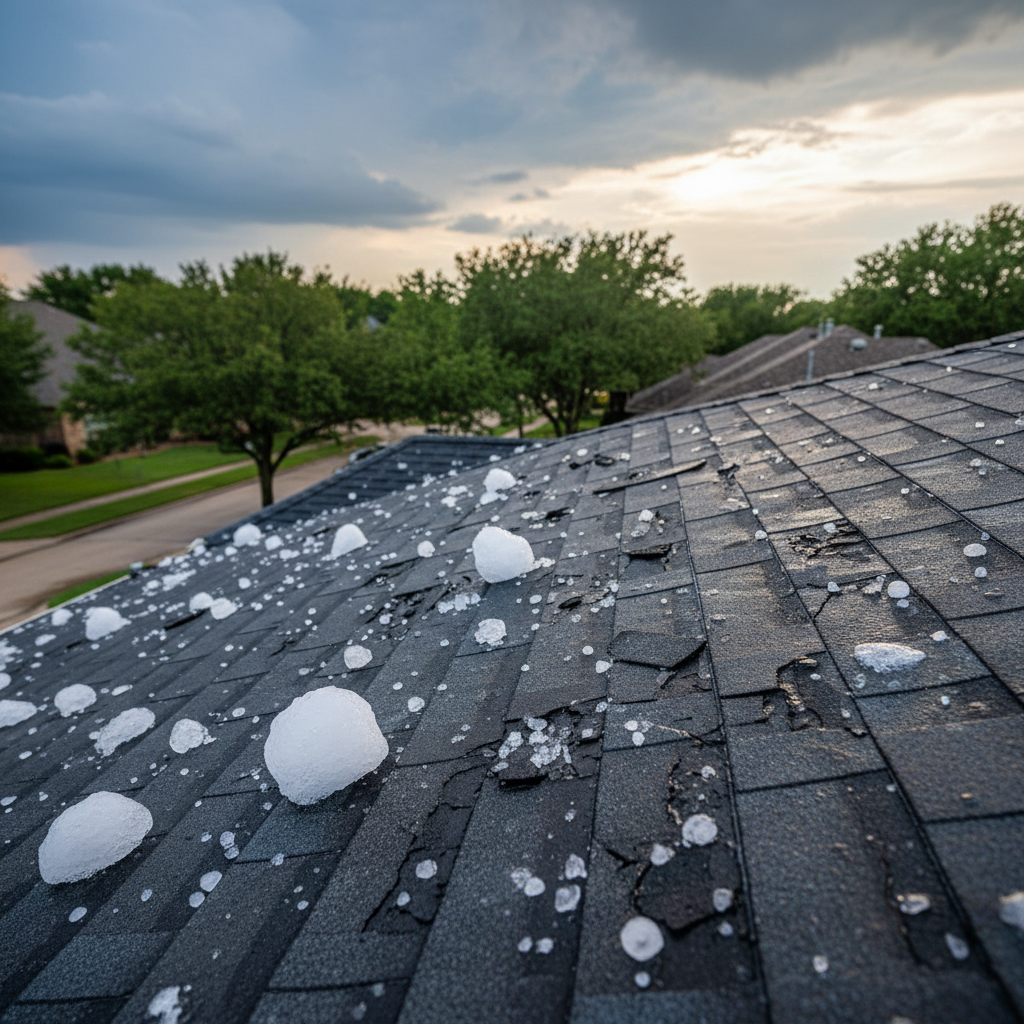
Texas is one of the most storm-intense states in the country. From spring hailstorms rolling through East Texas to powerful summer thunderstorms that sweep across the Dallas–Fort Worth corridor, roofs here take a beating that most homeowners simply don't see until the damage is already serious.
The tricky part? Most storm damage doesn't announce itself with a leak. It builds quietly, storm by storm, season by season — until one day you're looking at a much bigger problem than you expected.
Why Texas Weather Is Especially Hard on Roofs
Texas roofs face a combination of weather stressors that would challenge even the best-built systems:
- Hailstorms — Texas sits squarely in "Hail Alley," and East Texas communities like Tyler, Longview, and Nacogdoches regularly see hail events that range from pea-sized nuisances to golf-ball-sized damage-makers.
- High winds — Severe thunderstorms routinely produce damaging gusts that lift shingles, break seals, and introduce moisture pathways.
- Intense heat and UV exposure — Long, hot Texas summers accelerate the breakdown of roofing materials between storm seasons.
- Rapid temperature swings — Sudden cold fronts following heat spells cause roofing materials to expand and contract, weakening their structure over time.
Each of these stressors alone is manageable. Together, cycling through year after year, they shorten a roof's useful life in ways that are easy to miss until they become expensive.
How Hail Actually Damages Shingles
When a hailstone strikes an asphalt shingle, it does more than leave a visible dent. Here's what's really happening beneath the surface:
Granule Loss
Shingles are coated with small granules that protect the underlying asphalt layer from UV rays and water. A hailstone knocks those granules loose. You may notice them collecting in your gutters after a storm. With enough granule loss, the shingle's core is exposed — and once that happens, deterioration accelerates.
Bruising and Soft Spots
Not all hail impact is visible from the ground. Inspectors look for soft spots — areas where the shingle mat underneath has been compromised but the surface still looks intact. These bruised areas are prone to cracking and moisture intrusion down the road.
Seal Strip Damage
Shingles have adhesive strips that bond them together and keep wind from lifting them. Hail impact — and the rapid temperature swings that follow — can break these seals, leaving shingles vulnerable to the next big storm.
The Compounding Effect: Storm After Storm
Here's what many Texas homeowners don't fully appreciate: a single storm rarely totals a roof. What actually happens is a slow, compounding process.
Storm one loosens granules and softens a few spots. Storm two lifts a handful of shingles where seals have weakened. The heat of summer bakes the exposed asphalt. Storm three drives water into the small gaps that have developed. By the time a leak appears on your ceiling, your roof may have been quietly degrading for two or three years.
This is exactly why a single point-in-time inspection — while valuable — tells only part of the story. Tracking your roof's condition over time is what gives you the full picture. That's the thinking behind RoofIQ from Full Armor HomeIQ, which turns a professional inspection into a simple 0–100 score you can track season after season.
What Storm Damage Looks Like at Different Stages
Understanding the progression helps you know when to act:
Early stage — Granule loss, minor bruising, a few lifted shingles. Easy and relatively affordable to address. Often invisible without a trained inspector.
Mid stage — Exposed asphalt, broken seals across multiple shingles, small gaps at flashing points. Water is starting to find its way in, even if you haven't noticed it indoors yet. Check out 5 Warning Signs Your Roof Needs Attention to know what to look for.
Late stage — Active leaks, decking damage, potential mold or wood rot in the attic. Repairs are significantly more involved at this point.
The difference between catching damage at the early stage versus the late stage can be thousands of dollars. Tracking your home's condition over time is one of the most practical things you can do as a homeowner.
Why East Texas Homeowners Face Unique Risks
In East Texas — communities like Tyler, Longview, Nacogdoches, and the surrounding area — homeowners deal with an added layer of challenge: humidity. High moisture levels mean that any small opening in your roof doesn't just let rain in. It creates conditions where mold, algae, and wood rot can develop quickly, accelerating the damage timeline compared to drier climates.
If you're in East Texas, you're not just managing storm season. You're managing a year-round environment that is actively working on your roof. A professional roof inspection — and a consistent record of your roof's health — is one of the smartest investments you can make.
How to Protect Your Roof Through Texas Storm Season
Here are a few practical steps Texas homeowners can take:
- Schedule a professional inspection after significant storm events. Don't wait for a leak to tell you something is wrong.
- Keep gutters clear. Granule-filled gutters are an early warning sign worth paying attention to.
- Document everything. A clear inspection record with before-and-after condition data gives you important information when it matters most — whether that's for maintenance planning, selling your home, or dealing with your insurance company.
- Don't rely on a single report. A roof inspection today is useful. A roof inspection today compared to one from two years ago is far more valuable.
For a detailed seasonal checklist, see Your Texas Storm-Season Roof Maintenance Checklist.
A Smarter Way to Track Your Roof's Health
Most homeowners either ignore their roof until something goes wrong or collect a stack of inspection PDFs they'll never read again. Neither approach gives you real insight.
Full Armor HomeIQ's RoofIQ score gives you something better: a single, clear number that tells you where your roof stands today — and a running history so you can see how it's trending over time. When storms hit, you'll know exactly where you started and what changed. And when it's time to sell, refinance, or talk to your insurance company, you'll have a clean, shareable report ready to go.
Texas weather isn't getting easier. The good news is that staying ahead of it doesn't have to be complicated.
Ready to know exactly where your roof stands? Get your RoofIQ Score today and connect with a vetted local inspector in East Texas or across the state. A professional inspection, a clear score, and a record that grows more valuable with every passing season.
Frequently Asked Questions
Written by Full Armor HomeIQ Team
The Full Armor HomeIQ team helps homeowners understand and track their home's condition — starting with the roof.
Get Your RoofIQ Score
Contact Full Armor HomeIQ for a free inspection and consultation.
Get a Free Quote