
How Texas Hail and Storms Damage Your Roof Over Time
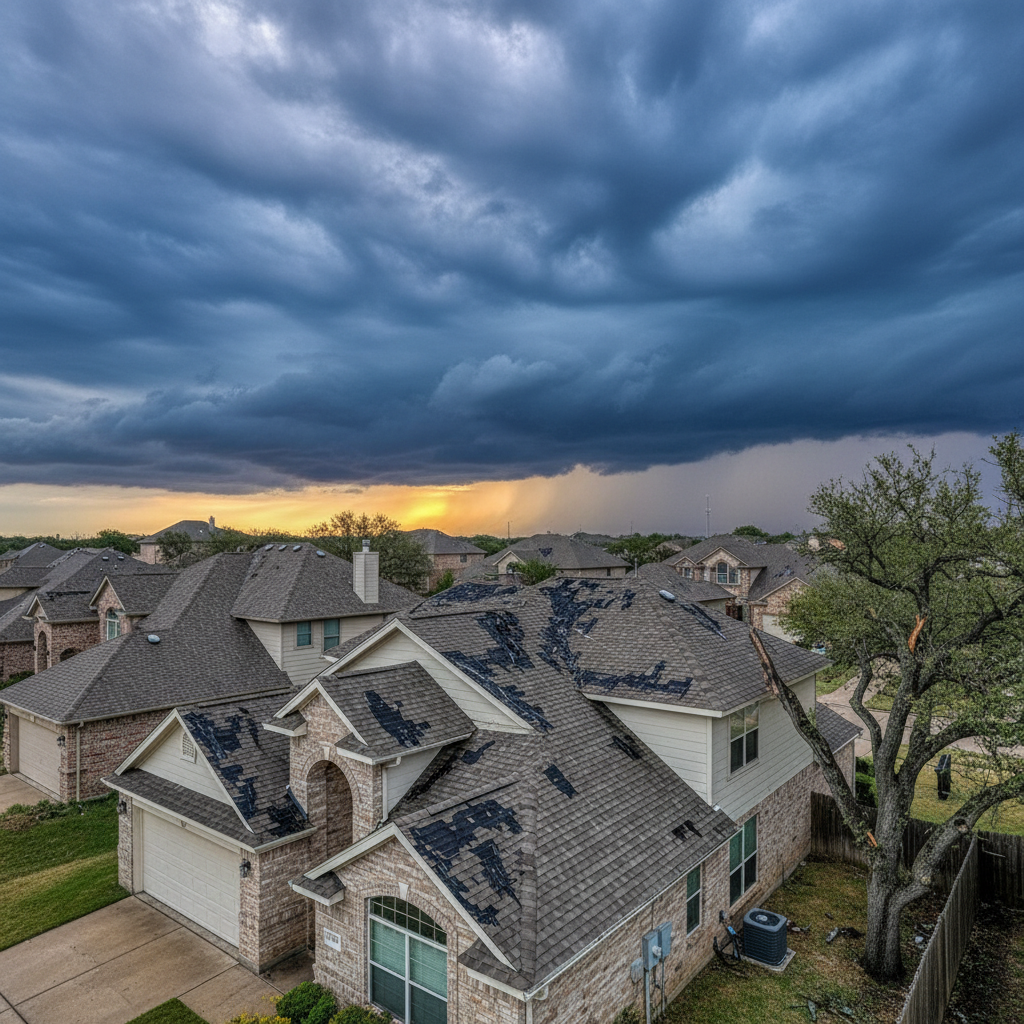
Texas weather is no joke. From spring hailstorms rolling across the Piney Woods to summer thunderstorms that pound East Texas neighborhoods, your roof takes a beating year after year. The tricky part? Most of the damage builds up slowly — storm after storm — until one day the problem is impossible to ignore and expensive to fix.
Understanding how hail and severe weather wear your roof down over time is one of the smartest things you can do as a homeowner.
The Cumulative Effect: Why One Storm Isn't the Whole Story
Here's what surprises a lot of Texas homeowners: it's rarely one single storm that destroys a roof. More often, it's the accumulation of damage across multiple seasons that weakens the system to the breaking point.
Each hailstorm, heavy rain event, or high-wind episode chips away at your roof's protective layers. What starts as minor granule loss or a small crack in a shingle can quietly let moisture work its way in — and moisture damage compounds fast.
This is exactly why tracking your roof's condition over time is more valuable than a single one-and-done inspection.
What Hail Actually Does to Your Roof
Not all hail damage looks the same, and not all of it is immediately visible from the ground. Here's what's happening at the shingle level:
- Granule loss: Hail knocks the protective granules off asphalt shingles. Those granules aren't just decorative — they shield the asphalt layer from UV rays and moisture. Once they're gone, the shingle degrades much faster.
- Bruising and cracking: Larger hailstones can crack shingles outright or leave soft spots (called bruising) that aren't visible until you know what to look for.
- Seal strip damage: The adhesive strip that bonds shingles together can be broken by impact, making shingles more vulnerable to wind lift in future storms.
- Flashing and vent damage: Hail doesn't just hit flat surfaces. Flashings around chimneys, vents, and skylights take hits too, and even small dents can compromise their seal.
Over time, each round of hail leaves your roof a little more exposed than before. A roof that survived last year's storm may not be in good shape to handle the next one.
High Winds: The Other Side of the Equation
East Texas and the greater Texas region see plenty of severe thunderstorms that bring sustained winds and gusts strong enough to lift, curl, or tear shingles — even without a tornado in the picture.
Wind damage tends to:
- Lift shingle edges, breaking the seal and allowing water underneath
- Remove shingles entirely, leaving decking exposed
- Drive debris — branches, leaves, and other material — across the surface, causing scratches and additional granule loss
- Stress the underlying structure over repeated events
A roof that's been through several strong wind events may look fine from the street but have compromised areas that only show up during a professional roof inspection.
Why the Damage Is So Easy to Miss
Most homeowners don't get on their roof after every storm — and honestly, that's the safe call. But that also means damage can go unnoticed for months or even years.
By the time you spot a water stain on your ceiling or find shingles in the yard, the underlying problem is usually well past its early stage. Early-stage damage — granule loss, minor cracking, small seal failures — rarely announces itself. It just quietly shortens your roof's remaining lifespan.
That's why knowing the warning signs your roof needs attention and scheduling professional checks after significant storms matters so much.
How Damage Stacks Up Season After Season
Think of your roof like a set of tires. Every mile adds wear. Every hailstorm, every high-wind event, every season of Texas heat and humidity subtracts from your roof's remaining service life. A 15-year-old roof that's been through several severe hail events may be performing more like a 20-year-old roof — even if it hasn't leaked yet.
Without a consistent inspection history, there's no way to know where you actually stand. You're essentially guessing.
This is the problem that a RoofIQ score is designed to solve. Instead of a confusing 40-page PDF that gets filed away and forgotten, you get a single 0–100 score that reflects your roof's current condition — and a record that builds over time so you can see whether your roof is holding steady or declining.
What Smart Texas Homeowners Do Differently
Homeowners who stay ahead of storm damage tend to share a few habits:
- They schedule a professional inspection after any significant hail or wind event, not just when something looks wrong
- They keep a documented history of inspections so they can show trend data over time
- They use that documentation when selling, refinancing, or working through an insurance process
- They connect with vetted local professionals rather than relying on whoever knocks on their door after a storm
If you're in East Texas — whether that's Longview, Tyler, Nacogdoches, or anywhere in between — working with a local roofing inspector who knows regional weather patterns makes a real difference. Our guide to finding a trustworthy roofing inspector in East Texas is a good place to start.
You can also use our Texas storm-season roof maintenance checklist to stay organized between professional inspections.
Don't Wait for a Leak to Find Out Where You Stand
Storm damage in Texas is a when, not an if. The difference between a manageable repair and a major replacement often comes down to how early the damage was caught and documented.
Ready to know your roof's actual condition — not just a guess? Get your RoofIQ Score today. Full Armor HomeIQ connects you with vetted local inspection professionals across Texas and turns their findings into a clear, trackable score you can actually use.
Frequently Asked Questions
Written by Full Armor HomeIQ Team
The Full Armor HomeIQ team helps homeowners understand and track their home's condition — starting with the roof.
Get Your RoofIQ Score
Contact Full Armor HomeIQ for a free inspection and consultation.
Get a Free Quote